Updated for 2026 — reflects current Companies House rules, HMRC expectations, director privacy updates, and UK bank onboarding realities.
⚠️ Trying to use a PO Box for your company?
Most founders realise the issue only when Companies House or a bank rejects the setup.
Quick Answer (2-min read)
Use a compliant UK business address
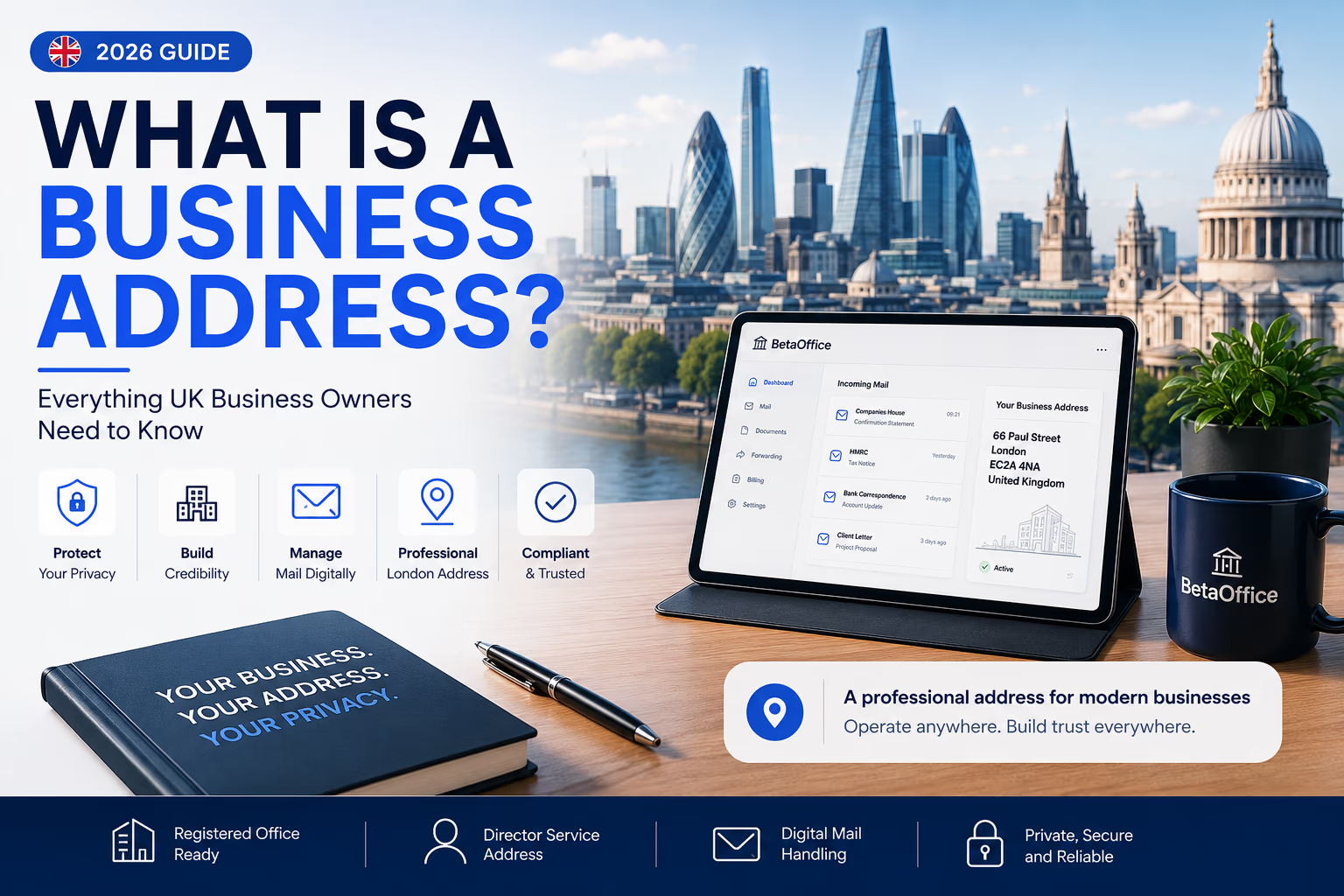
BetaOffice provides a real London registered office address, director service address, and digital mail handling — designed for Companies House, HMRC, and bank verification.
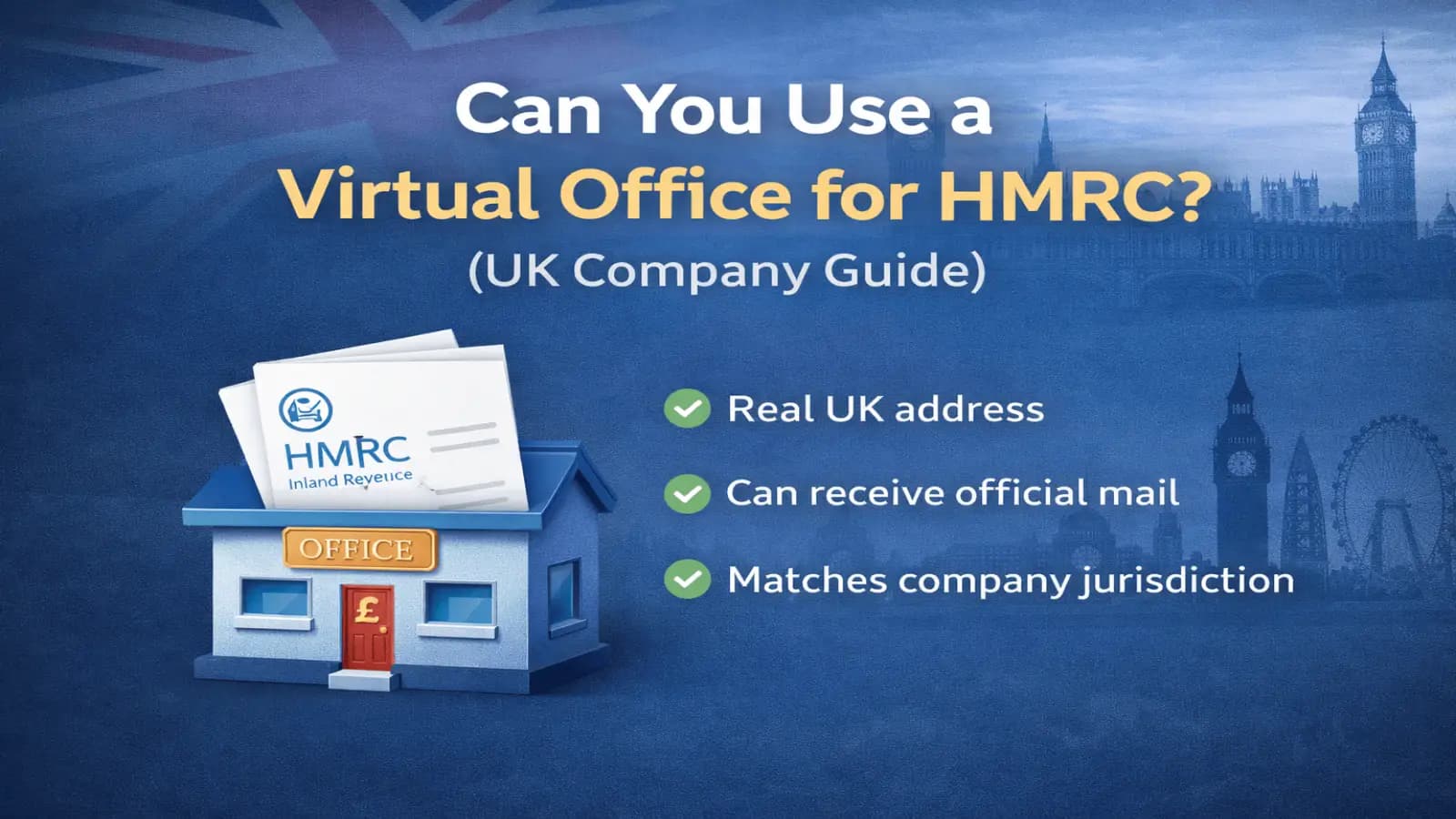
A PO Box cannot be used as your company’s Registered Office Address at Companies House.
You need a real, physical, deliverable street address — not just a mailbox-style address.
This ensures:
- Companies House and HMRC can deliver statutory notices
- Legal documents can be properly served
- The company is tied to a clear UK jurisdiction (E&W / Scotland / NI)
A PO Box may still be used for general correspondence, but not as your official registered office.
Why a PO Box is not acceptable as a Registered Office
Under the Companies Act 2006, the registered office must be:
- A physical address capable of receiving documents
- A location showing a geographical place
- Suitable for the service of legal documents
A PO Box typically fails these criteria.
❌ It does not clearly identify a physical location
❌ It may not satisfy statutory service expectations
❌ It often creates friction during bank verification
👉 In practice, many founders only discover this after delays or rejections during setup.
Many founders initially try to use a PO Box to protect their home address.
However, this often leads to delays during bank checks or additional verification requests once Companies House records are reviewed.
If privacy is your concern, the compliant route is using a street-address registered office such as a
👉 registered office in London.
When a PO Box can be used
A PO Box is acceptable for:
- Marketing mail
- Customer support mail
- General correspondence
- Non-statutory communication
But your Registered Office must still be a street address.
Many founders combine:
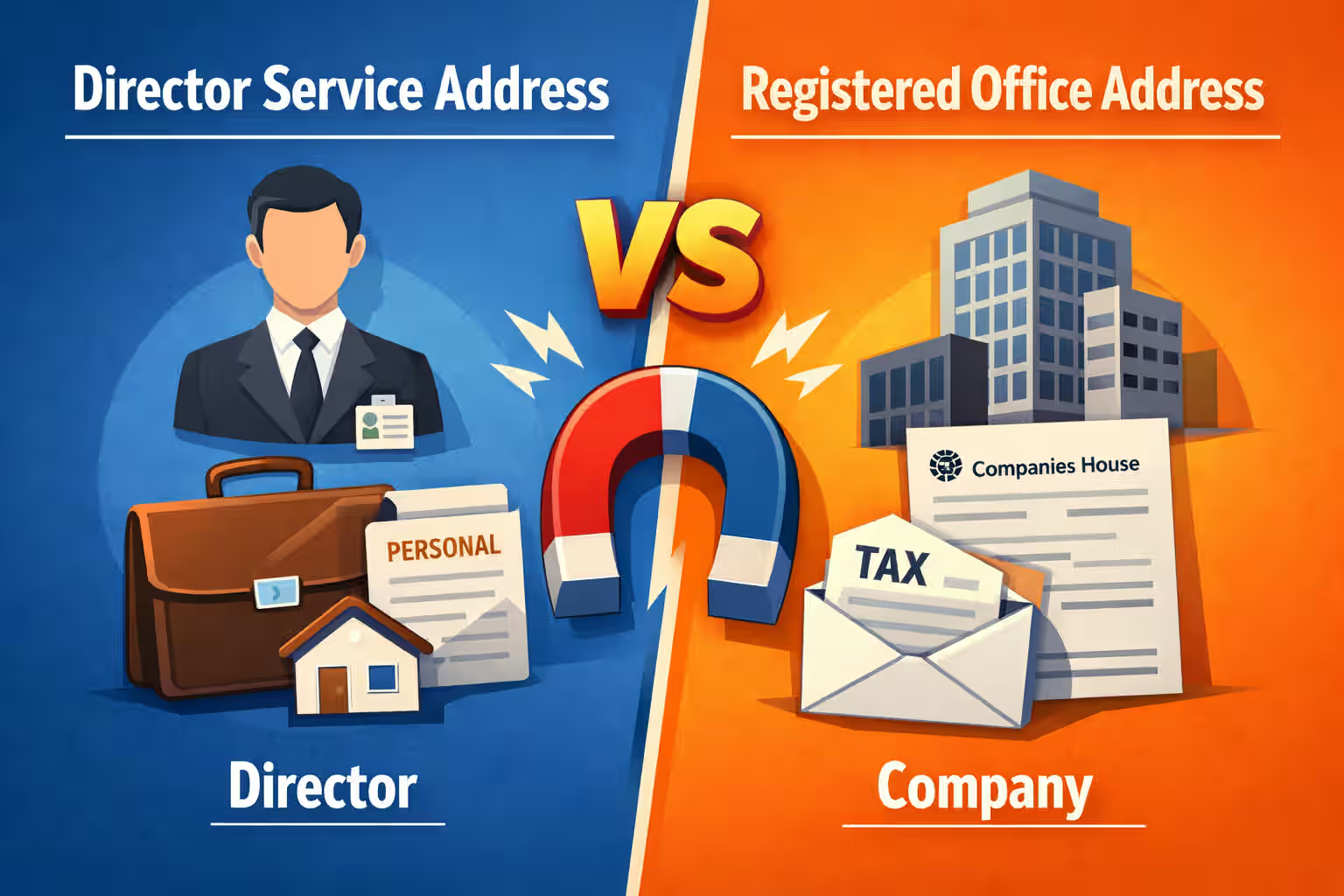
- A compliant registered office
- A separate director service address
- Digital mail handling
👉 This avoids both compliance issues and missed letters.
For example, here’s how a
👉 cheap virtual office in London
is typically structured to meet compliance requirements while protecting privacy.
The modern solution: compliant street address + digital handling
If you operate remotely or want to avoid publishing your home address, a compliant virtual office setup is usually the cleanest approach.
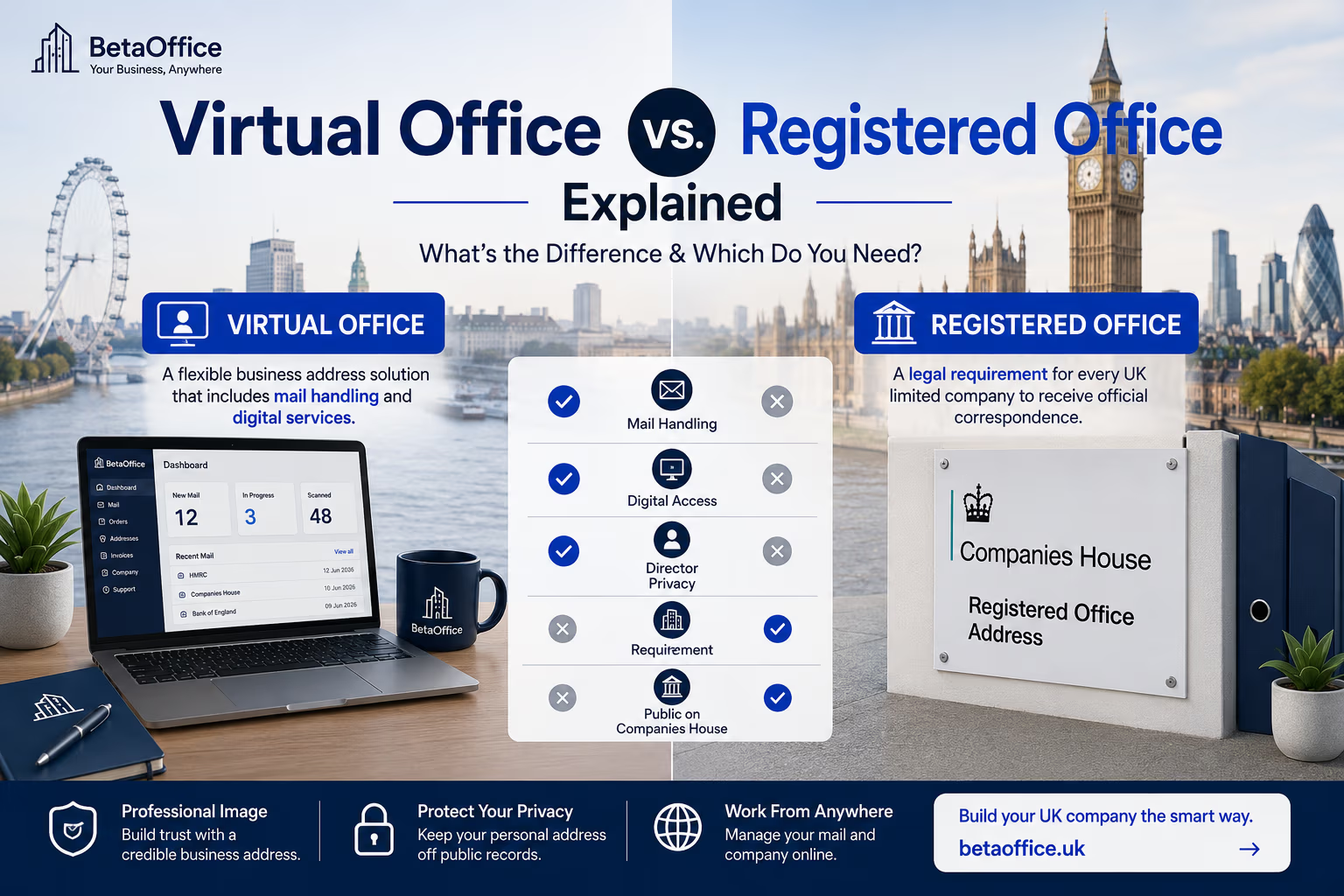
A standard configuration often includes:
Registered Office Address
A real London street address suitable for Companies House.Director Service Address
Keeps your residential address off the public register where applicable.Mail scanning & organisation
Digital copies, searchable records, and optional reminders.On-demand forwarding
Forward only what matters.
👉 This combination is what most remote founders actually use in practice.
You can see how a compliant London setup works in practice here:
👉 Virtual Office London.
Bank onboarding: why PO Boxes create problems
Most UK banks and fintechs typically require:
✔ A real UK street address
✔ Consistency with Companies House records
✔ Proof that official mail can be reliably received
A PO Box often triggers additional checks, delays, or compliance questions during verification.
👉 In many cases, switching to a compliant address resolves these issues immediately.
Using a compliant street-address registered office usually results in a smoother onboarding process.
Compliance checklist
Your setup is generally compliant if:
- Your registered office is a real street address
- It matches the correct UK jurisdiction
- You use a director service address if privacy matters
- You can reliably access statutory correspondence
- Your website and invoices display consistent details
Mini-FAQ
Can I use a PO Box if I also provide a street address?
Yes — as long as the registered office is the street address. A PO Box may be used for general mail only.
Can non-UK residents register in London?
Yes — provided the company uses a real, deliverable London address that meets Companies House requirements.
Can legal documents be served to a PO Box?
Generally no. Legal service should be possible at the registered office street address.
Is a mailbox address the same as a registered office?
Not necessarily. It must be a real, deliverable location suitable for statutory mail.
Founder takeaway
A PO Box works for general correspondence.
But for Companies House, HMRC, and bank verification workflows, you’ll usually need a real UK street address as your registered office.
🚀 Avoid setup issues from day one
If you want to avoid delays, rejections, or compliance problems:
✔ Use a real UK street address
✔ Keep your personal address private
✔ Make sure you can access all official mail digitally
👉 You can explore a complete setup here:
London virtual office address