Most photographers don’t struggle with taking photos — they struggle with turning it into a business.
TL;DR
Turn your photography into a real business
Use a UK business structure, protect your personal address, and present your photography brand professionally.
You can start a photography business in the UK with minimal setup.
But to operate professionally, you’ll need:
- a clear business structure
- proper invoicing and payments
- a credible business presence
Why many photographers start a business
Photography often begins as a hobby.
But once you start getting paid — weddings, portraits, events, commercial work — it becomes a business.
Running photography professionally usually means:
- invoicing clients
- managing contracts
- handling tax
- building a brand
At that point, most photographers formalise their work.
Step 1: Decide your photography niche
Before setting anything up, define your focus.
Common niches include:
- wedding photography
- portrait photography
- commercial shoots
- real estate photography
- product photography
- event photography
👉 Your niche affects your pricing, clients, and positioning.
Step 2: Choose a business structure
Photographers in the UK typically choose between:
Sole trader
Best for starting quickly:
- simple setup
- minimal admin
- low cost
But you and the business are the same entity.
Limited company
Many photographers upgrade to a UK Ltd company later.
Reasons:
- more professional image
- better for working with brands
- separation between personal and business finances
👉 How to open a UK company as a non-resident
Step 3: Register your business
- Sole trader → register with HMRC
- Limited company → register with Companies House
Every company needs a registered office address.
👉 Registered office address London
Step 4: Consider a professional business address
Many photographers start with their home address.
But this has downsides:
- it becomes public
- privacy issues
- less professional image
That’s why many photographers use a
👉 virtual office in London
Typical setup includes:
- registered office
- director service address
- digital mail access
Step 5: Set up banking and payments
To operate professionally, separate your finances.
Common options:
- bank transfers
- invoicing tools
- card payments
- online payment platforms
If you run a limited company, a business account is usually required.
Step 6: Understand tax basics
Depending on your structure:
- sole trader → income tax
- limited company → corporation tax
- VAT → if you exceed threshold
Many photographers eventually work with an accountant.
Step 7: Build your portfolio and online presence
This is where most clients decide.
A strong setup includes:
- portfolio website
- Instagram / social media
- testimonials
- enquiry form
👉 Your portfolio matters more than your paperwork.
Step 8: Protect your personal address
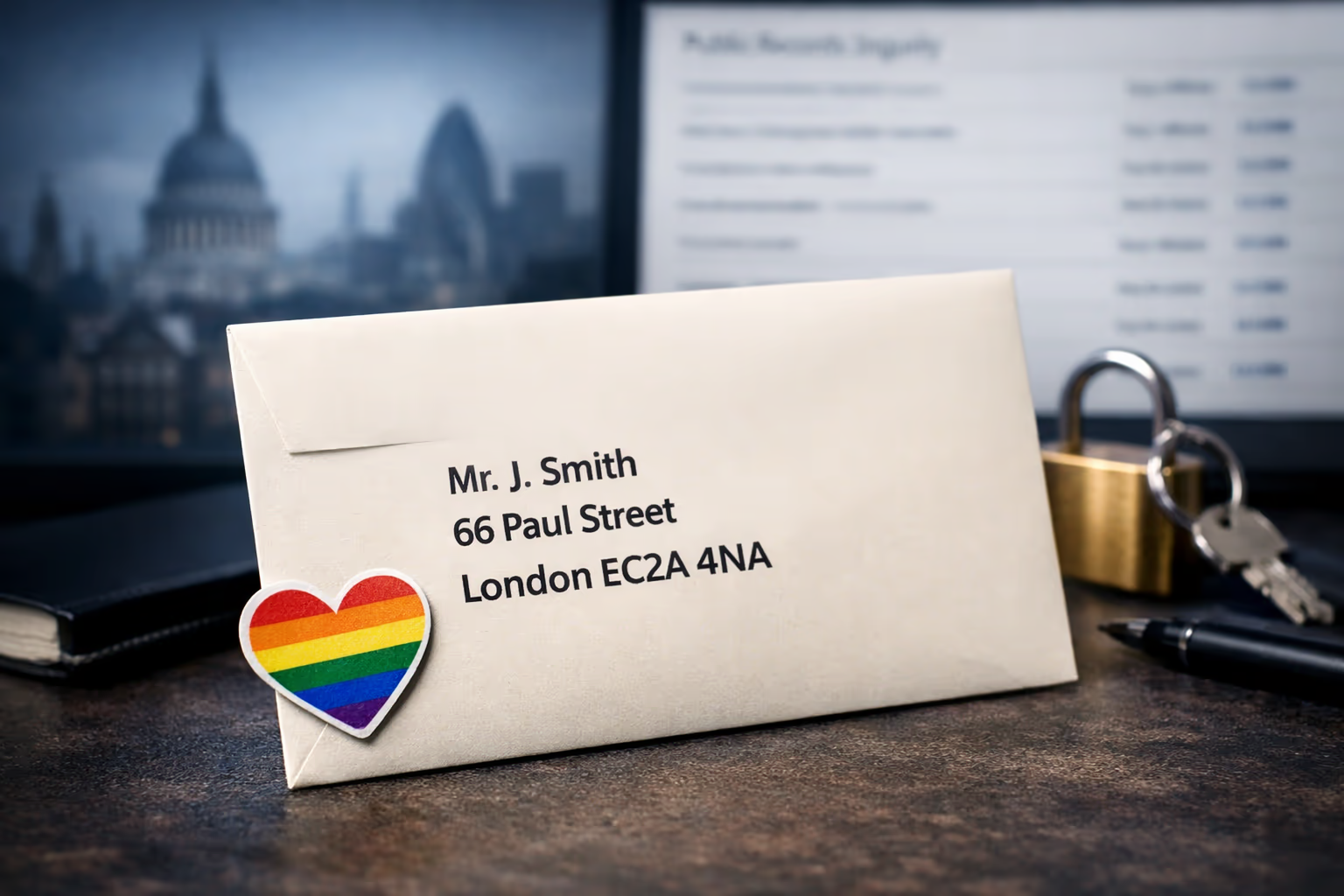
If you run a limited company, your details appear on public records.
But your home address doesn’t have to.
A service address allows you to:
- stay private
- remain compliant
- look more professional
👉 Director service address London
Common mistakes new photographers make
Mixing personal and business finances
Makes accounting messy.
Underpricing
Forgetting to include:
- editing time
- travel
- equipment
- revisions
No contracts
Always define:
- delivery
- usage rights
- payment terms
A simple checklist
- niche defined
- business structure chosen
- business registered
- payment system ready
- portfolio live
- professional address (optional but recommended)
Final takeaway
Starting a photography business is easy.
Turning it into a professional operation requires:
- structure
- credibility
- consistency
Many photographers grow faster when they separate personal life from business and present a clean, professional setup.
📸 Build your photography business properly
If you want to work with higher-paying clients or brands:
✔ Use a proper business structure
✔ Keep your home address private
✔ Build a credible business presence
Disclaimer: This article is for general information only and does not constitute legal or financial advice.