⚖️ Worried a virtual office might not be legal? Most founders aren't actually facing a legal issue — they're using the wrong type of address setup, or a provider that doesn't meet the current "appropriate address" test.
Quick answer
Use a fully compliant UK business address
BetaOffice provides a real London street address accepted by Companies House, HMRC, and banks — with reliable digital mail handling.
Yes — virtual offices are legal in the UK, provided they meet Companies House and HMRC requirements.
The key rule, since reforms introduced under the Economic Crime and Corporate Transparency Act 2023, is what Companies House calls an "appropriate address":
An address is appropriate if a document delivered there by hand or post would be expected to reach someone acting on the company's behalf, and if delivery can be acknowledged.
This test replaced the older, looser standard and came into effect for new registrations from 4 March 2024, with existing companies also expected to comply. The confusion founders run into usually comes from how the address is structured and operated — not from the legality of virtual offices as a category.
Official source: https://www.gov.uk/guidance/registered-office-address
What does "legal" actually mean here?
When founders ask whether a virtual office is legal, they usually mean one of these:
- Can I use it as my registered office?
- Will Companies House accept it?
- Will HMRC send letters there?
- Will banks approve it?
In practice, all of these are accepted when the address passes the appropriate address test and is operated properly — meaning it's staffed enough to receive and acknowledge documents, not simply a mailbox that forwards whatever arrives whenever it gets around to it.
Companies House rules (registered office)
Since the 2023 Act's reforms took effect, a registered office must:
- Be a real, physical street address in the UK
- Be located in the correct jurisdiction (England & Wales, Scotland, or Northern Ireland, matching where the company is registered)
- Be capable of receiving documents and acknowledging delivery — this is the part many older explainers miss
- Not be a PO Box used on its own, without an accompanying physical address that meets the above
What changed in 2024: before this reform, Companies House had limited power to challenge a registered office once it was on file. Now, if Companies House believes an address doesn't meet the appropriate address test, it can reject the address at incorporation, formally query an existing company's address, or ultimately change the registered office to a default address held by Companies House itself — a serious outcome that can affect a company's ability to be contacted and, in persistent non-compliance cases, contribute to the company being struck off the register.
Virtual offices are permitted, and remain one of the most common ways small companies satisfy this rule — but the standard is now higher than it used to be, and not every "virtual office" provider on the market operates at a level that clears it.
For a detailed breakdown of registered office requirements, see: 👉 What is a registered office address?
If you're evaluating practical setups, this overview explains how a compliant 👉 registered office in London is typically structured.
HMRC correspondence
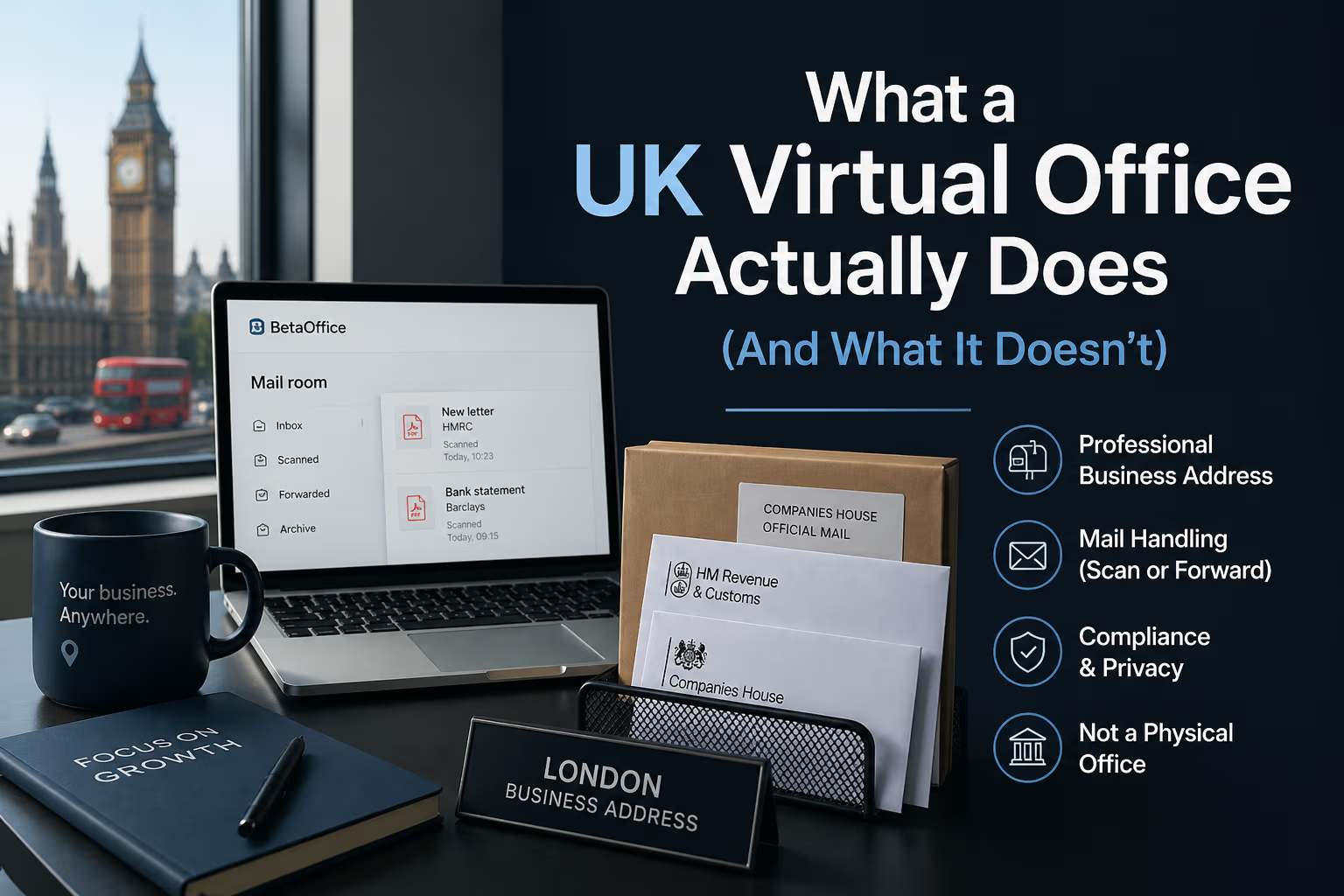
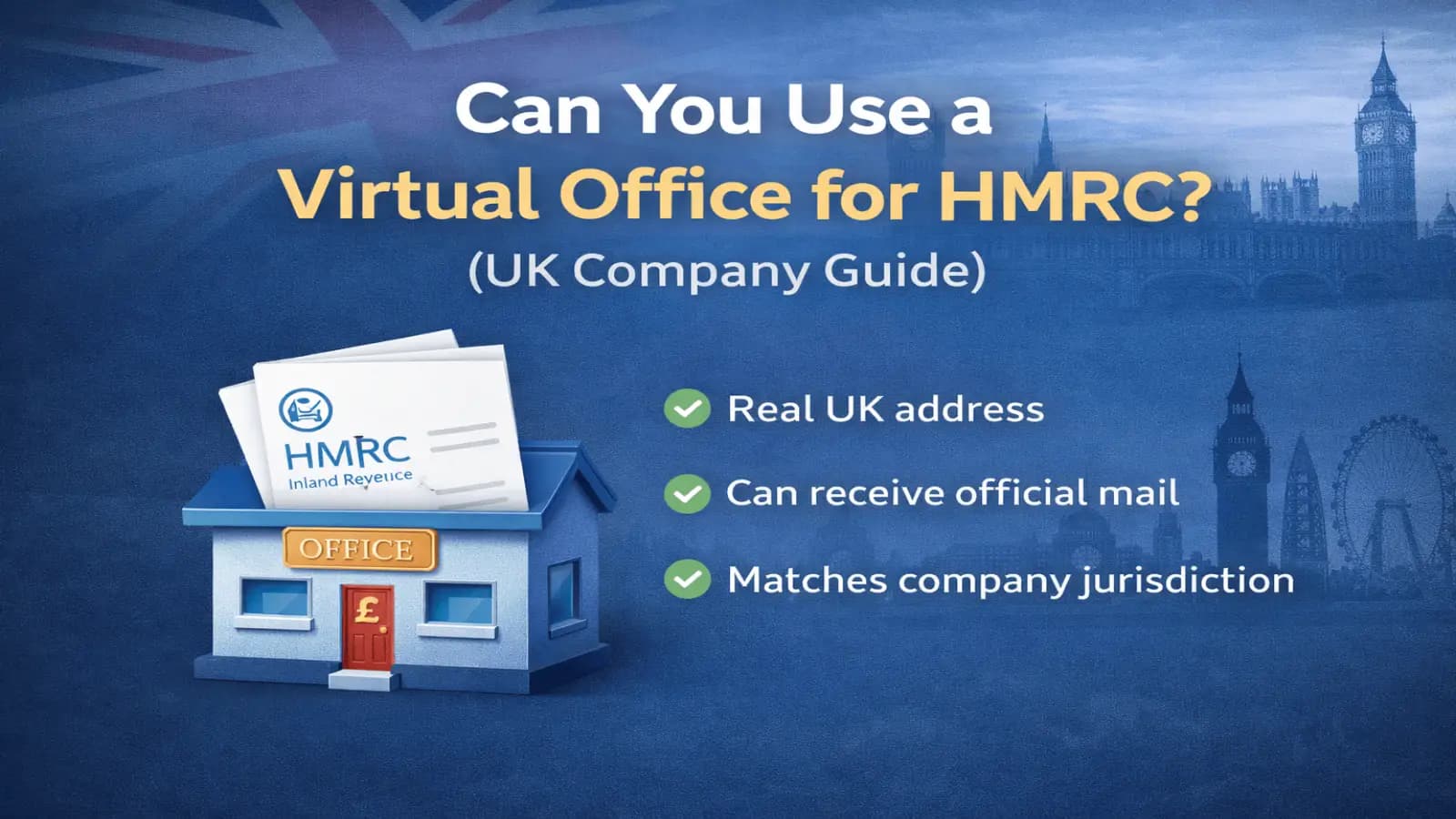
HMRC sends corporation tax notices, VAT letters, PAYE updates, and penalty or reminder notices to your registered office and any business address you've given them.
HMRC does not prohibit virtual offices. What matters is:
- Mail is reliably received and reaches you promptly
- Deadlines aren't missed because a letter sat unscanned for weeks
- Official documents can be accessed digitally without delay
Most real-world compliance failures trace back to poor mail handling, not to the use of a virtual office itself — a founder misses a VAT deadline because a letter wasn't scanned in time, not because the address type was somehow unlawful.
What is NOT legal, or is likely to fail the appropriate address test
Problems arise when:
- ❌ The address is a PO Box used alone, with no physical address behind it
- ❌ Mail can't be reliably accessed or acknowledged
- ❌ Legal service (formal delivery of court or statutory documents) isn't possible at the address
- ❌ The jurisdiction doesn't match the company's place of incorporation
- ❌ The provider isn't genuinely staffed or operating — an address that exists on paper but where nobody actually processes post
Any of these can lead to a rejected incorporation, a Companies House query on an existing company, or in the worst case, the company's registered office being forcibly changed.
For clarity on the specific PO Box question: 👉 Can a PO Box be used as a business address?
Virtual office vs PO Box (legal distinction)
| Feature | Virtual Office | PO Box |
|---|---|---|
| Real street address | ✔ | ✖ |
| Passes the "appropriate address" test | ✔ (if properly staffed/operated) | ✖ |
| Companies House compliant | ✔ | ✖ |
| HMRC correspondence | ✔ | Limited |
| Legal service possible | ✔ | ✖ |
| Bank acceptance | ✔ | Often rejected |
This is one of the most misunderstood distinctions in UK company setup, and it's the specific gap the 2023 reforms were designed to close — the old rules were vaguer about what counted, which let some forwarding-only services present themselves as compliant when they weren't.
Anti-money laundering checks: why you'll be asked for ID
Every legitimate virtual office and registered office provider in the UK is required to register for anti-money-laundering (AML) supervision and verify the identity of anyone using their address service — typically a passport or driving licence plus proof of address. This isn't optional paperwork the provider is adding for fun; it's a regulatory requirement, and a provider that doesn't ask you for ID verification is a red flag, not a convenience.
Banks & payment providers
Banks typically require a real UK address that's consistent with Companies House records, and evidence that correspondence can be handled securely. Issues arise when founders attempt to use mailbox-style services that don't meet statutory standards — banks and payment processors run their own checks and will often reject an address that wouldn't pass the appropriate address test either.
In most cases, switching to a compliant, properly staffed address resolves verification issues. A compliant street-address virtual office — such as a 👉 London virtual office setup — is generally acceptable when structured correctly.
Director service address (privacy)
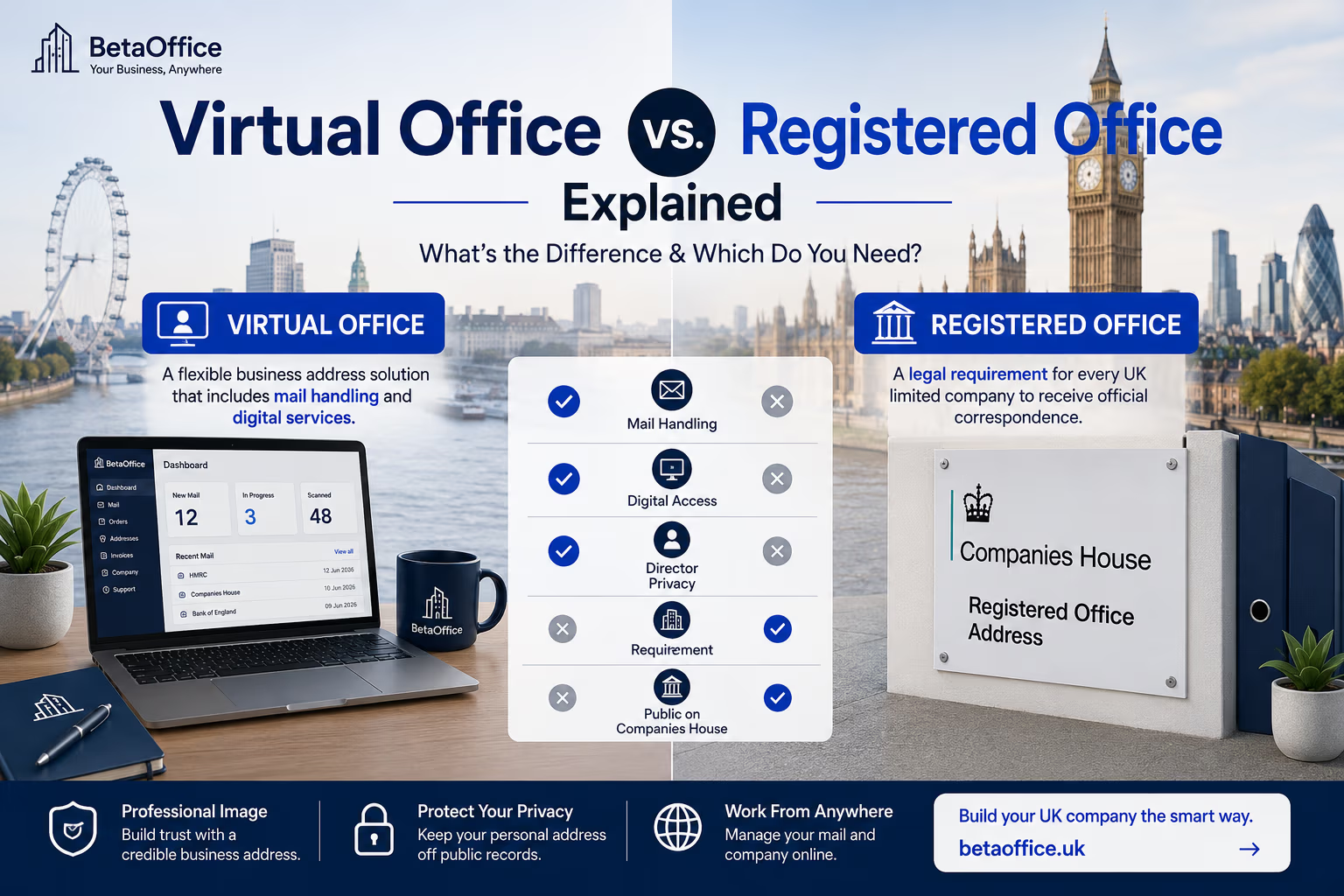
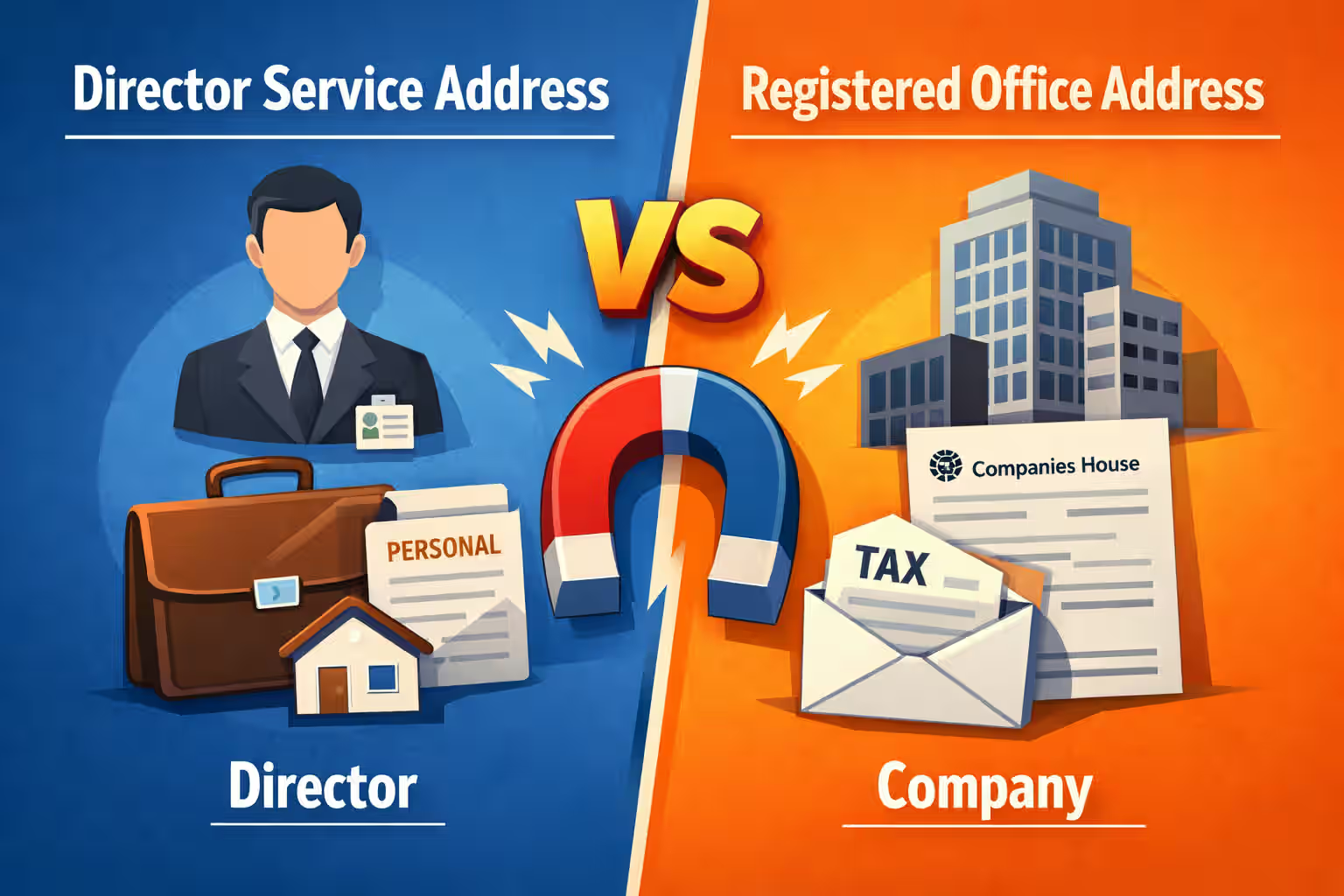
UK law separately allows directors to use a service address instead of their residential address on the public register. This is a different (though often bundled) service from the registered office, and it provides privacy protection, public record compliance, and a clean separation between personal and company details.
This is one of the most common and legitimate uses of virtual office services — using your home address as a director's service address means it stays visible on the public register indefinitely, even after you move, which is why most founders using virtual offices set this up alongside the registered office.
Is a virtual office legal for non-UK residents?
Yes. Non-UK residents may incorporate UK companies, use a UK registered office, and receive statutory mail digitally without needing UK residency themselves. This structure is widely used by SaaS founders, consultants, ecommerce sellers, and international startups — the appropriate address rules apply the same way regardless of where the directors live.
When a virtual office may not be sufficient
A virtual office might not be enough if:
- You require a daily staffed premises for regulatory or licensing reasons
- A specific regulator mandates a physical trading location (certain FCA-regulated activities, for example)
- You need to host in-person client operations regularly
For most digital-first companies, consultancies, and remote teams, a compliant registered office setup is sufficient and is exactly what the appropriate address test was designed to permit.
FAQ
What is the Companies House "appropriate address" test?
It's the standard introduced under the Economic Crime and Corporate Transparency Act 2023: an address is "appropriate" if a document delivered there would be expected to reach someone acting for the company, and delivery can be acknowledged. It replaced the previous, less specific registered office rules and applies from 4 March 2024.
Can Companies House reject or change my registered office address?
Yes, since the 2023 reforms took effect. If Companies House believes an address doesn't meet the appropriate address test, it can query it, reject it at incorporation, or ultimately change a company's registered office to a Companies House default address, which is a serious compliance failure to end up in.
Is a PO Box ever acceptable as a registered office?
Not on its own. A PO Box without a genuine physical address behind it capable of receiving and acknowledging documents doesn't meet the appropriate address test.
Do virtual office providers have to verify my identity?
Yes. Providers are required to register for anti-money-laundering supervision and carry out ID checks before setting up your address service. Expect to provide a passport or driving licence and proof of address regardless of provider.
Can I use the same virtual office as both my registered office and director service address?
Yes, this is one of the most common and legitimate setups, and most providers bundle both together. You can legally use different addresses for each if you prefer, but combining them is simpler for most founders.
Will using a virtual office affect my company bank account application?
Not if the address is genuinely compliant. Banks typically reject mailbox-style or forwarding-only addresses during verification, but a properly staffed virtual office that passes the appropriate address test is generally accepted.
Legal checklist
A virtual office is compliant in the UK if:
- It is a real, physical UK street address
- It passes the Companies House "appropriate address" test — documents can be received and acknowledged
- Companies House accepts it at incorporation without a query
- HMRC mail reaches you reliably and promptly
- The jurisdiction matches your company's place of incorporation
- Legal documents can be formally served there
- It is not a PO Box used alone
- The provider carries out AML identity verification before setup
If all of the above are satisfied, the setup is considered fully compliant.
Final takeaway
A virtual office is fully legal in the UK when it meets the Companies House "appropriate address" standard introduced under the 2023 reforms. Most issues founders run into come from misunderstanding that standard, or using a provider that doesn't genuinely operate to it — not from virtual offices being some kind of legal grey area.
Used properly, a virtual office is simply compliance infrastructure, privacy protection, and structured mail handling — not a loophole, and not something regulators are trying to phase out.
🚀 Set up your company the compliant way
If you want to avoid legal issues and verification problems:
✔ Use a real UK street address that passes the appropriate address test ✔ Ensure mail is handled reliably and acknowledged, not just forwarded eventually ✔ Keep your personal address private with a proper director service address
👉 Explore a compliant London setup here: Virtual office London
Disclaimer: This article is for general information only and does not constitute legal advice. Rules on registered office addresses can change — always verify current requirements against gov.uk Companies House guidance, or consult a solicitor, before relying on this for a specific situation.