📍 Setting up or running a UK limited company?
Every UK company must maintain an appropriate registered office address. It is the company’s official address at Companies House, appears on the public register and receives important statutory correspondence.
Quick answer
Set up your company with a compliant registered office
BetaOffice provides a real London registered office address, director service address and digital statutory mail handling for UK companies and remote founders.
A registered office address is the official legal address of a UK company.
It is recorded at Companies House and used for formal correspondence, including notices and documents sent by Companies House, HMRC and other public authorities.
The address must:
- Be a physical address in the UK
- Be in the same UK jurisdiction as the company
- Be an appropriate address for receiving company documents
- Allow delivered documents to reach someone acting for the company
- Allow delivery to be recorded or acknowledged
- Not be a PO Box
The registered office does not have to be where the company carries out its daily work.
Because it appears publicly, many founders use a professional registered office service instead of their residential address.
Official guidance:
What does “registered office address” mean?
A registered office address is the address officially assigned to a company on the Companies House register.
It acts as the company’s formal contact point for statutory and legal correspondence.
In simple terms:
The registered office is the address at which the company can officially be contacted.
It is sometimes informally described as the company’s:
- Registered address
- Official address
- Statutory address
- Company registration address
- Legal correspondence address
These expressions are often used interchangeably in ordinary conversation, but registered office address is the formal Companies House term.
Registered office definition
A registered office is the official address of a company for the receipt of formal documents and notices.
Companies House requires every company to maintain an appropriate address at all times.
An address is considered appropriate where, in the ordinary course of events:
- A document delivered there by hand or by post would be expected to come to the attention of someone acting on behalf of the company.
- The delivery of documents can be recorded through an acknowledgement of delivery.
This means that simply entering an address on Companies House is not enough. The company must have a reliable arrangement for receiving and accessing correspondence delivered there.
Why does a company need a registered office?
The registered office creates a reliable official contact point between the company and government bodies, regulators and other parties.
It is used for correspondence such as:
- Companies House notices
- HMRC letters
- Corporation Tax correspondence
- Confirmation statement reminders
- Filing notices
- Legal documents
- Enforcement correspondence
- Other statutory communications
A company must maintain its registered office throughout its existence, including periods when it is dormant or not actively trading.
Is a registered office a legal requirement?
Yes.
Every UK limited company and limited liability partnership must provide a registered office address.
A company cannot simply remove its registered office without replacing it with another appropriate address.
If Companies House determines that an address is not appropriate, it can take action to change the company’s address to a default address held at Companies House. The company may then be required to provide a compliant replacement address within a specified period.
Failure to maintain an appropriate address can create serious administrative and compliance problems, including missed statutory correspondence and potential strike-off action.
What is an appropriate registered office address?
A registered office must be more than a location that technically exists.
It must be an address where company correspondence can be received reliably and passed to someone responsible for the company.
An appropriate address should therefore:
- Be a real physical UK address
- Accept postal and hand-delivered documents
- Be monitored consistently
- Have a reliable mail-handling process
- Allow delivery to be acknowledged
- Pass correspondence to the company promptly
- Remain available for as long as the company uses it
An unattended property, inaccessible address or address used without permission may not meet these requirements.
Does the registered office have to be a physical address?
Yes.
The registered office must be a physical address in the United Kingdom.
It cannot be:
- A Royal Mail PO Box
- A purely digital mailbox
- An email address
- An address outside the UK
- An address at which company documents cannot reliably be received
A company may use the address of a professional registered office provider, accountant, solicitor or company formation agent, provided the address meets the appropriate-address requirements and the provider has authorised its use.
Can a PO Box be used as a registered office?
No. A PO Box cannot be used as a company’s registered office address.
Since March 2024, companies must maintain an appropriate physical address and cannot use a Royal Mail PO Box or an equivalent mailbox-only service as their registered office.
The key issue is not merely whether mail can be collected. The address must allow documents delivered there to reach a person acting for the company, and the delivery must be capable of being recorded.
For a detailed explanation, see:
👉 Can a PO Box be used as a business address?
Which UK jurisdiction must the address be in?
The registered office must remain in the same jurisdiction in which the company was incorporated.
The main Companies House jurisdictions are:
| Company jurisdiction | Where the registered office may be located |
|---|---|
| England and Wales | England or Wales |
| Wales | Wales |
| Scotland | Scotland |
| Northern Ireland | Northern Ireland |
For example:
- A Scottish company must maintain a Scottish registered office.
- A Northern Irish company must maintain a Northern Irish registered office.
- A company incorporated in England and Wales may use an address in either England or Wales.
A company cannot move its registered office from one jurisdiction to another merely by filing an address change.
BetaOffice’s London address is suitable for companies incorporated in England and Wales.
Is the registered office shown publicly?
Yes.
The current registered office appears on the public Companies House register.
Members of the public may normally view:
- The full registered office address
- The company’s previous registered office addresses
- The date on which an address changed
- Documents previously filed using the address
This is an important privacy consideration.
Changing the registered office stops the old address from being used as the company’s current address, but it does not automatically erase the old address from historical Companies House records.
Does the address appear on the incorporation certificate?
The registered office is recorded as part of the company’s Companies House information, but it is not normally printed as part of the standard certificate of incorporation.
The certificate generally confirms details such as:
- The company name
- Company number
- Incorporation date
- Company type
- Jurisdiction of registration
The registered office can be viewed separately through the company’s Companies House profile and filing history.
Can I use my home address?
Yes, provided your home is in the correct jurisdiction and meets the appropriate-address requirements.
However, your home address will normally become publicly visible if you use it as the company’s registered office.
This can expose the address through:
- Companies House search results
- Company-information websites
- Search engines
- Business directories
- Credit-reference databases
- Historical company filings
Using a home address may therefore be unsuitable for directors who:
- Work remotely
- Rent their home
- Move frequently
- Receive customers or business correspondence
- Want to separate personal and business information
- Do not want their residential address widely searchable
A professional registered office can provide a public company address while allowing the director’s residential address to remain private on the public register.
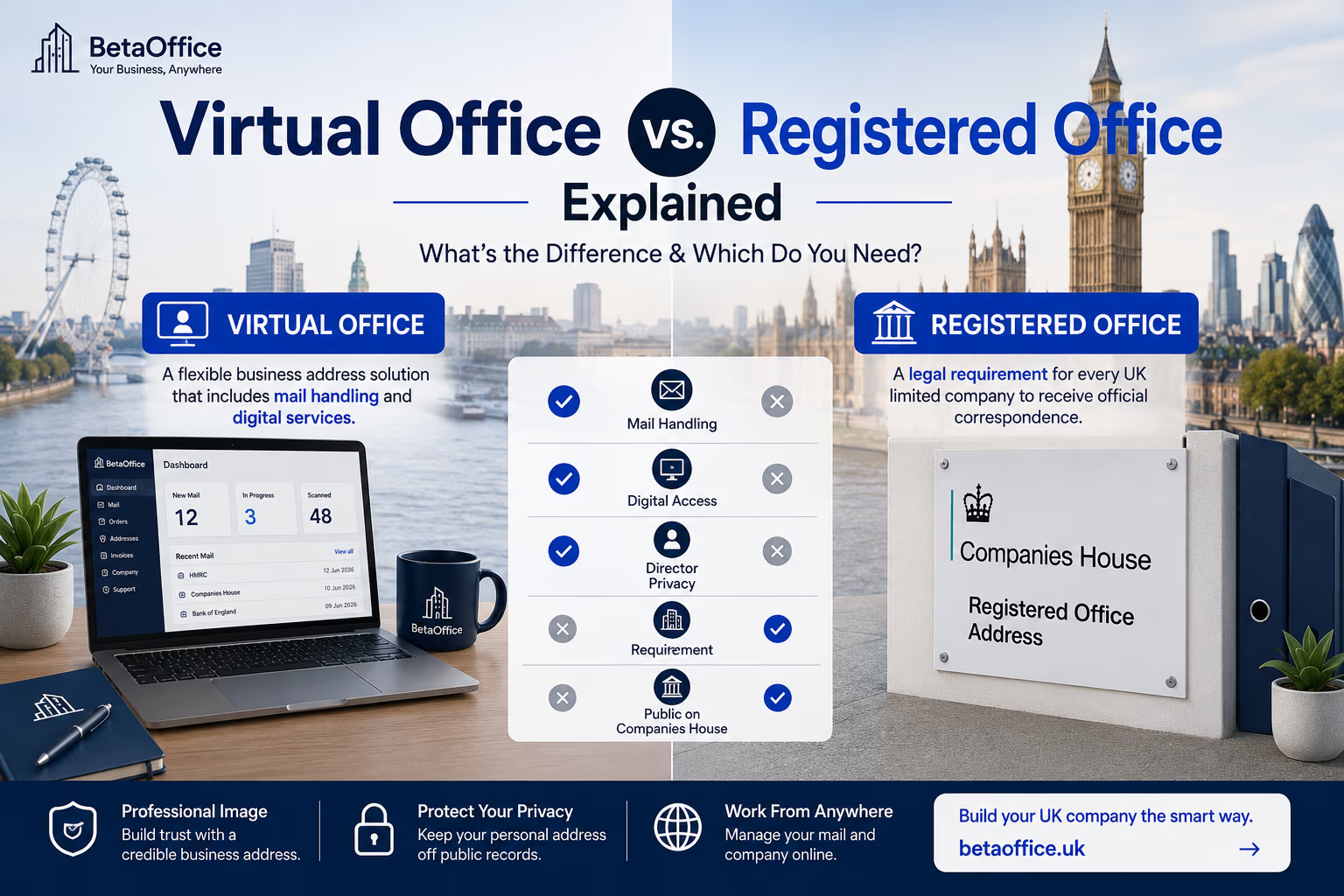
Can a virtual office be used as a registered office?
Yes, a virtual office can be used as a registered office where it provides an appropriate physical address and reliable mail handling.
The service should:
- Authorise the company to use the address
- Accept statutory correspondence
- Notify the company when mail arrives
- Provide access to delivered documents
- Maintain accurate customer records
- Support Companies House compliance
- Remain active while the address is in use
The term virtual office does not remove the legal requirements. What matters is whether the underlying address and service satisfy the Companies House rules.
Read more:
👉 Is a virtual office legal in the UK?
👉 Virtual office address in London
Registered office vs business address
A registered office and a business address may be the same, but they perform different functions.
| Feature | Registered office | Business address |
|---|---|---|
| Primary purpose | Official company correspondence | General commercial correspondence |
| Required by law | Yes, for limited companies | Not necessarily |
| Recorded at Companies House | Yes | Not automatically |
| Publicly displayed | Yes | Depends on use |
| Used for statutory mail | Yes | Not necessarily |
| Used for customers and suppliers | Sometimes | Commonly |
| Must stay in incorporation jurisdiction | Yes | Not generally |
A business address is a broader commercial term. It might be used on:
- Invoices
- Websites
- Marketing materials
- Customer correspondence
- Supplier accounts
- Business directories
A registered office is specifically the company’s official Companies House address.
What is a registered business address?
“Registered business address” is not usually a separate formal category under Companies House rules.
People often use the phrase when referring to either:
- The company’s registered office address
- A business correspondence address
- An address used to register for a commercial service
- A trading or operational address
When a form asks for a “registered business address”, check whether it means the address listed at Companies House or the address from which the business operates.
Registered office vs trading address
A trading address is the address from which a business carries out its normal commercial activities.
It may be:
- A shop
- An office
- A workshop
- A warehouse
- A home workspace
- A coworking space
The registered office, by contrast, is the formal address used for statutory correspondence.
A company can therefore:
- Trade from one location
- Store goods at another location
- Use a separate registered office
- Use another address for customer returns
The registered office does not have to be the company’s main place of work.
Registered office vs head office
A head office is usually the company’s principal operational or administrative location.
The registered office is its official statutory address.
| Registered office | Head office |
|---|---|
| Defined by company law | General business term |
| Required for UK companies | Not every company has one |
| Recorded at Companies House | Not necessarily recorded |
| Receives statutory correspondence | Supports management and operations |
| Can be provided by an address service | Usually an operational location |
A company’s head office and registered office may be the same address, but they do not have to be.
Registered office vs operational address
An operational address is where the company conducts part of its everyday business.
It may be where:
- Employees work
- Products are stored
- Services are delivered
- Customers visit
- Management operates
A remote-first company may have no permanent operational office but must still maintain a registered office.
The registered office provides the legal correspondence function even when the business operates remotely.
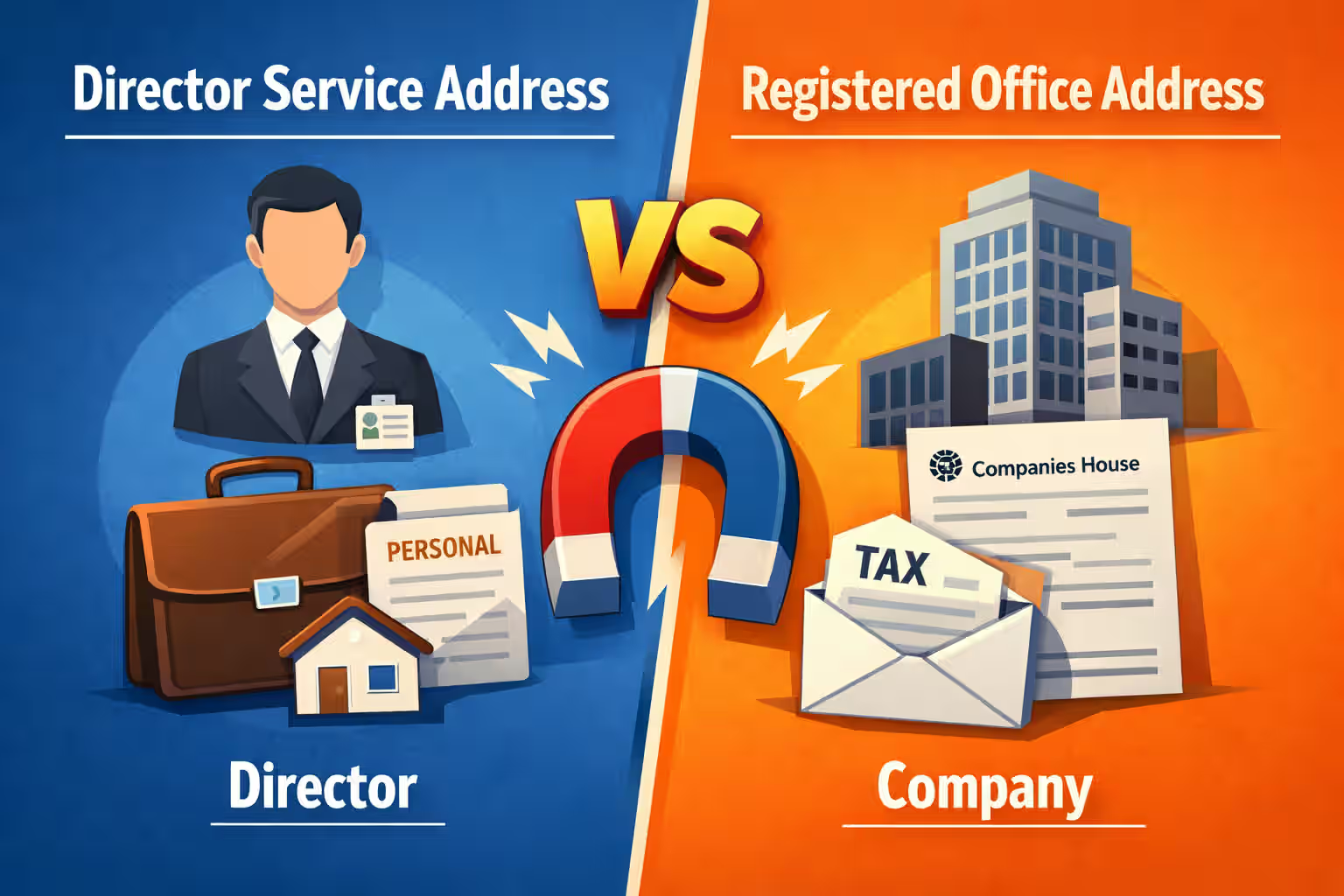
Registered office vs director service address
A company’s registered office and a director’s service address protect different legal interests.
| Address type | Used for | Public? |
|---|---|---|
| Registered office | Official company correspondence | Yes |
| Director service address | Official correspondence for a director | Yes |
| Director residential address | Identity and regulatory records | Normally protected from the public |
A director service address allows directors to avoid displaying their residential address as their public correspondence address.
A company may use the same professional address for both:
- Its registered office
- Its directors’ service addresses
The provider must authorise both uses.
Learn more:
👉 Director service address in London
Registered office vs residential address
The registered office belongs to the company’s public record.
A residential address identifies where an individual lives.
Using a residential address as the registered office makes that address public in its company context. It may also remain visible in historical records even after the company changes address.
Using a separate professional address can help directors maintain a clearer boundary between:
- Personal residence
- Public company information
- Business correspondence
- Statutory mail
What is a statutory address?
“Statutory address” is a descriptive expression rather than the standard Companies House label.
In the context of a UK limited company, it normally refers to the company’s registered office because that is the address used for official notices and documents required by law.
The correct formal term to use in Companies House filings is:
Registered office address
What is statutory mail?
Statutory mail is official correspondence relating to a company’s legal and regulatory obligations.
Examples may include:
- Companies House notices
- Filing reminders
- HMRC correspondence
- Tax notices
- Official requests for information
- Legal notices
- Documents served on the company
Statutory mail should be treated as time-sensitive.
A company remains responsible for responding to official correspondence even if it fails to read mail sent to its registered office.
This is why reliable scanning, notification and forwarding arrangements are important.
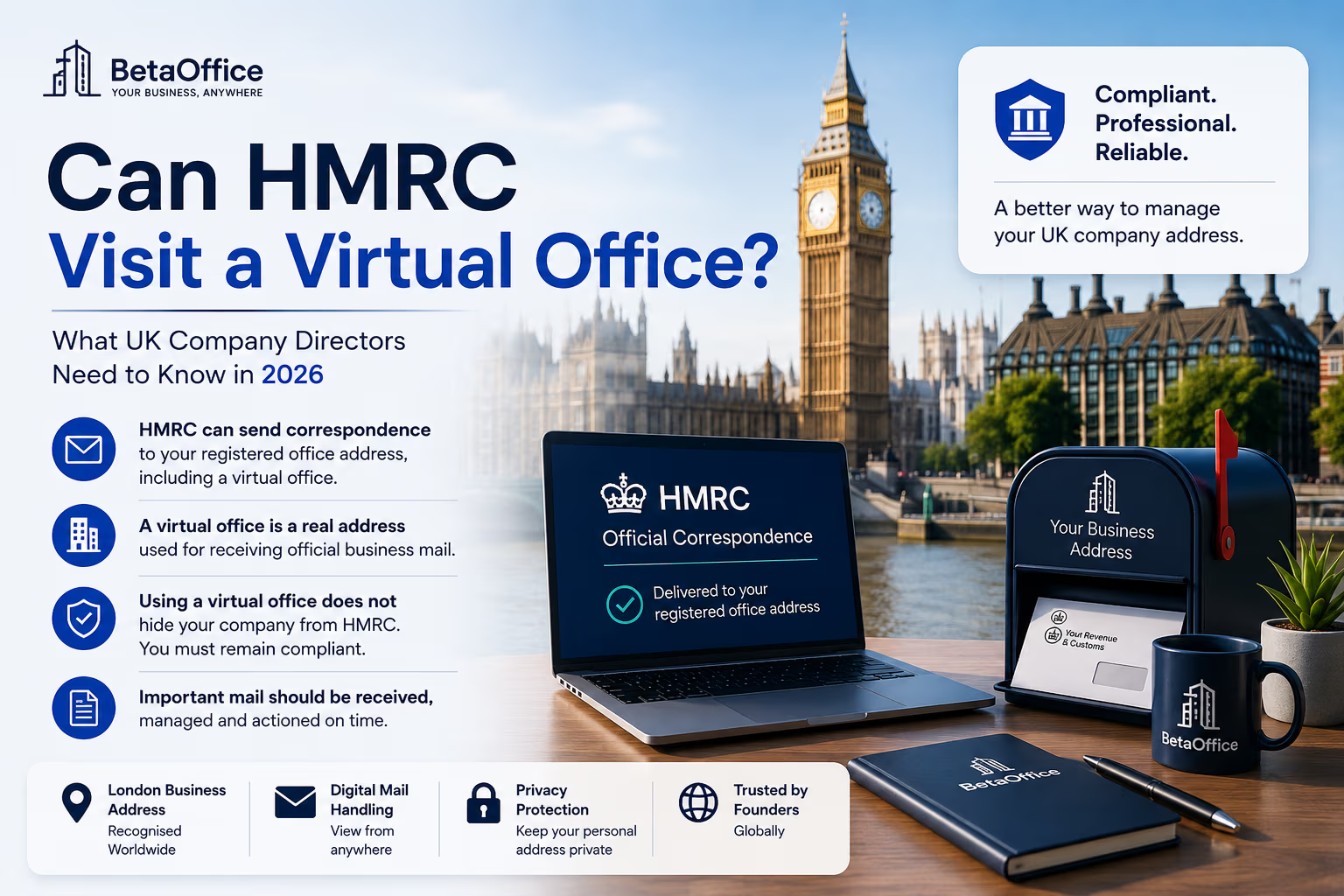
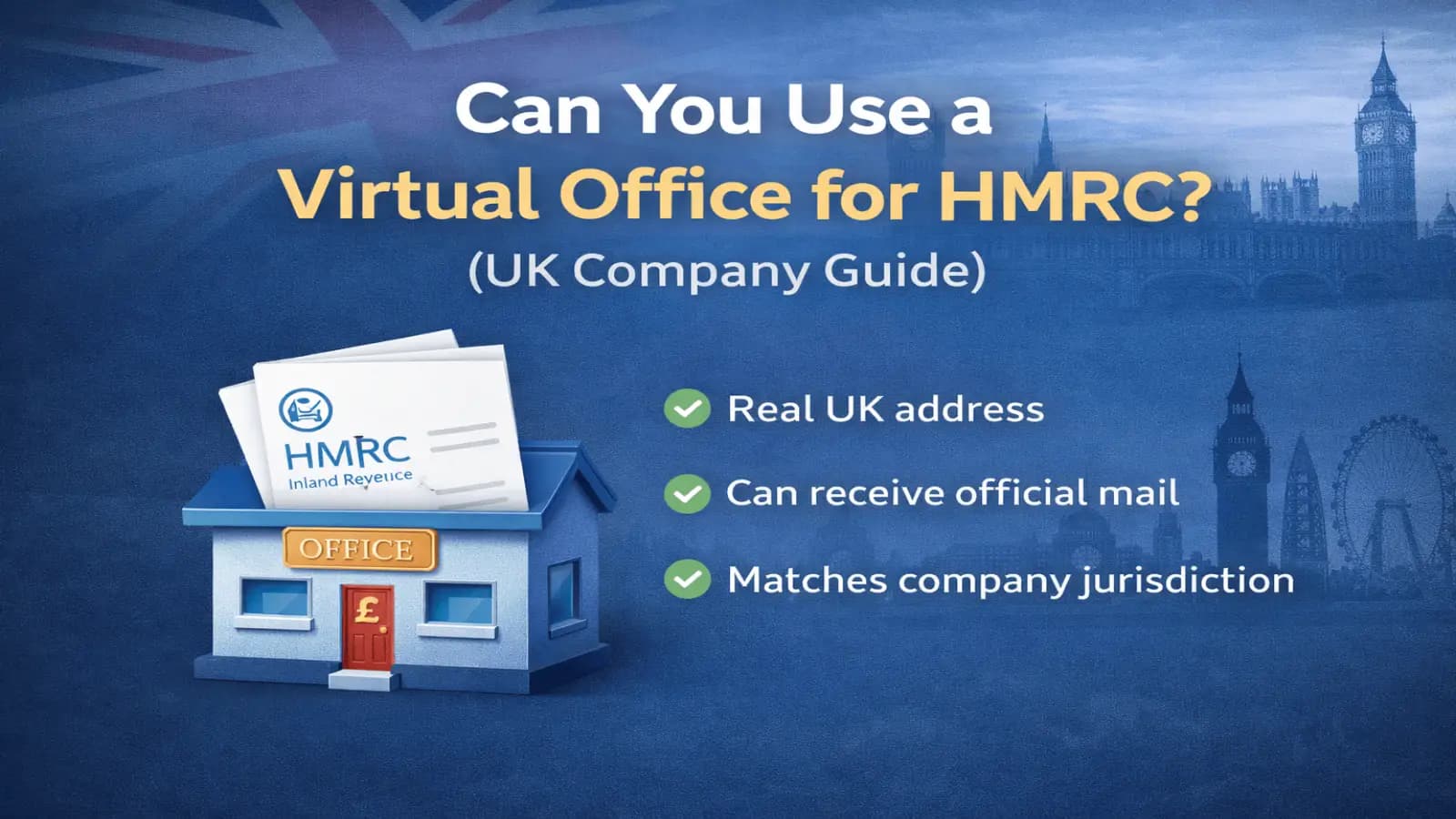
Does HMRC use the registered office?
HMRC may send company correspondence to the registered office or to another correspondence address held on its systems.
When a registered office change is accepted by Companies House, Companies House normally informs HMRC of the change. However, companies should still check that their tax records and contact details are accurate.
Depending on the tax and service involved, HMRC may hold separate addresses for:
- Corporation Tax
- PAYE
- VAT
- Self Assessment
- Customs or import matters
A registered office service should therefore be capable of handling HMRC correspondence promptly.
Does Companies House send mail to the registered office?
Yes.
The registered office is the company’s official address for Companies House correspondence.
Documents and notices may include:
- Filing reminders
- Compliance notices
- Requests for information
- Authentication-related correspondence
- Registrar correspondence
- Notices relating to company status
Companies must not assume that every notice will also arrive by email.
A registered email address is required separately, but it does not replace the registered office.
Is the registered email address public?
No.
Companies must provide Companies House with a registered email address, but it is not displayed on the public register.
Companies House uses it to communicate electronically with the company.
The registered email address and registered office serve different purposes:
| Detail | Registered office | Registered email |
|---|---|---|
| Required | Yes | Yes |
| Public | Yes | No |
| Receives physical documents | Yes | No |
| Must remain appropriate/current | Yes | Yes |
| Replaces the other | No | No |
Do non-UK residents need a UK registered office?
Yes.
A UK company must maintain a registered office in its incorporation jurisdiction even where:
- The directors live overseas
- The shareholders are overseas
- The company has no permanent UK workspace
- The business is managed remotely
- Most customers are outside the UK
The directors themselves do not need to live at the registered office.
For a company incorporated in England and Wales, a professional London address can provide the required UK contact point while correspondence is accessed remotely.
See also:
👉 Best virtual office for non-UK residents
Can the registered office be in London?
Yes, provided the company is incorporated in England and Wales or otherwise permitted to maintain its registered office there.
A London registered office is commonly used by:
- Remote-first companies
- International founders
- Consultants
- Agencies
- Ecommerce businesses
- Technology companies
- Property companies
- Contractors
- Online service businesses
The location does not mean the company physically trades from or occupies the premises.
A registered office service provides use of the address for authorised company and correspondence purposes. It does not normally create a tenancy, lease or exclusive right to occupy the building.
Explore the service:
👉 Registered office address in London
Does a registered office prove that a company trades there?
No.
A registered office confirms the company’s official correspondence address. It does not necessarily mean that:
- Employees work there
- Directors are present there
- Customers can visit
- Stock is stored there
- The company rents an office there
- The company’s main operations take place there
Companies House records the address for legal and administrative purposes.
Businesses should describe their physical presence accurately and should not imply that a virtual or registered office is an occupied workspace unless that is genuinely the case.
Can customers visit the registered office?
Not automatically.
A registered office is primarily for official correspondence. Whether visitors are allowed depends on the address provider and the service agreement.
Many registered office and virtual office locations:
- Do not accept unplanned visitors
- Do not provide meeting rooms
- Do not provide desk space
- Do not allow customer collections
- Do not permit the address to be described as a staffed branch
Check the provider’s terms before publishing instructions that invite customers to attend.
Can the same address be used by multiple companies?
Yes.
Professional registered office providers commonly host many companies at the same address.
The fact that multiple companies share an address does not by itself make the address invalid.
What matters is whether:
- Each company is authorised to use it
- Correspondence can be identified correctly
- Mail reaches the correct company
- Delivery can be recorded
- The provider maintains appropriate compliance controls
Can I use my accountant’s or solicitor’s address?
Potentially, yes.
You may use the address of an accountant, solicitor, formation agent or professional adviser where:
- They give permission
- The address is in the correct jurisdiction
- It is an appropriate physical address
- They agree to receive company correspondence
- They pass correspondence to you reliably
Do not use a third party’s address without clear authorisation.
What happens if mail is not collected?
Ignoring or failing to collect registered-office mail does not remove the company’s responsibility.
A company can still be treated as having received correspondence delivered to its registered office.
Missed mail may lead to:
- Missed filing deadlines
- Tax complications
- Penalties
- Failure to answer Companies House enquiries
- Failure to respond to legal documents
- Loss of good standing
- Strike-off action
- Court or enforcement consequences
The address should therefore be actively monitored, not merely listed.
How to choose a registered office provider
Before using a professional address, confirm that the service:
- Permits registered office use
- Permits director service address use where required
- Accepts Companies House and HMRC correspondence
- Notifies you promptly when mail arrives
- Provides secure scanning or forwarding
- Verifies customer identity
- Maintains clear subscription records
- Explains which mail types are accepted
- Keeps the address available while your subscription is active
- Provides a process for changing or cancelling the service
Avoid services that provide only a postal label or mailbox without reliable access to statutory correspondence.
How to change a registered office address
A company can change its registered office through Companies House.
The new address must:
- Be in the same jurisdiction as the existing registered office
- Be a physical address
- Meet the appropriate-address requirements
- Be authorised for use by the company
The address does not officially change until Companies House registers the update.
After the change is accepted, review and update the address shown on:
- The company website
- Business letters
- Order forms
- Invoices where applicable
- Customer terms
- Contracts
- Financial accounts
- Banking and payment-provider records
- Insurance policies
- Supplier accounts
- Licences and registrations
Official service:
Change a company’s registered office address
Does changing the address remove the old one?
No, not usually.
Previous registered office addresses can remain visible in the company’s filing history and historical public records.
Changing the address protects the home from being used for future registered-office correspondence, but it does not necessarily remove past references.
Companies House provides separate procedures in limited circumstances for applying to suppress certain residential-address information from historical documents.
What must a company display on its website?
A limited company’s website and business correspondence must normally display prescribed company information, including:
- The registered company name
- Company number
- Registered office address
- The part of the UK in which the company is registered
- The fact that the company is limited, where applicable
This information does not have to appear prominently on every webpage, but it should be easy to find.
Many companies place it in the website footer, legal page or contact section.
Official guidance:
Company information on signs, stationery and websites
Common registered office mistakes
Using a PO Box
A PO Box does not meet the current registered-office requirements.
Using an address without permission
The property owner or service provider should expressly authorise the company’s use of the address.
Failing to monitor mail
The company remains responsible for official correspondence sent to the registered office.
Cancelling the address service without changing Companies House
Ending a subscription does not automatically update the public register.
The company must arrange a replacement address and file the change.
Using an address in the wrong jurisdiction
A Scottish company cannot move its registered office to England, and a company incorporated in England and Wales cannot move its registered office to Scotland or Northern Ireland.
Assuming the registered office is private
The address is publicly displayed.
Confusing the registered office with the registered email
Both are required and perform separate functions.
Describing a virtual office as a physical branch
Use of a registered office does not necessarily establish occupation, employees or a customer-facing presence at the location.
Registered office checklist
Before registering or changing your address, confirm that:
- The address is physical and located in the UK
- It is in the correct company jurisdiction
- It is not a PO Box
- You have permission to use it
- Documents can be delivered by hand or post
- Delivery can be acknowledged
- Someone acting for the company will receive the documents
- Mail will be scanned or forwarded promptly
- The address will remain active while listed at Companies House
- You understand that the address is public
- You have also provided a registered email address
- Your website and business records will be updated after any change
Frequently asked questions
What is a registered office address?
It is the official public address of a UK company recorded at Companies House and used for formal company correspondence.
What is a registered address?
In a company context, “registered address” usually means the registered office address. It is not generally a separate Companies House category.
What does registered office mean?
It means the company’s official statutory address: the address at which government, regulatory and legal correspondence can be delivered.
Is a registered office the same as a business address?
Not necessarily. The registered office is the company’s formal Companies House address. A business address may be used more broadly for customers, suppliers and ordinary correspondence.
Is a registered office the same as a head office?
No. A head office is normally an operational or management location. The registered office is the statutory correspondence address.
Is a registered office the same as a service address?
No. The registered office belongs to the company. A service address is the public correspondence address of an individual director, secretary or certain other company officers.
Does the company have to work from its registered office?
No. The company can operate from another address or work entirely remotely.
Can I register a company at my home address?
Yes, if the address meets the rules. However, it will normally become publicly visible.
Can a virtual office be a registered office?
Yes, provided it offers a physical, appropriate address and reliable statutory-mail handling.
Can I use a PO Box?
No. A PO Box or equivalent mailbox-only address cannot be used as the registered office.
Can I use an address outside the UK?
No. A UK company must have a registered office in the relevant UK jurisdiction.
Can a non-UK resident use a registered office service?
Yes. The directors and shareholders do not need to live at the registered office.
Does the registered office have to be in London?
No. It only needs to be in the correct jurisdiction. Companies incorporated in England and Wales can use an appropriate address elsewhere in England or Wales.
Is the registered office public?
Yes. The current address and historical address information are generally available through the Companies House register.
Can I change the address later?
Yes. The change must be filed with Companies House and remains subject to the jurisdiction and appropriate-address rules.
Does Companies House tell HMRC when the address changes?
Companies House normally informs HMRC after an accepted registered-office change, but companies should still verify the contact details held across their tax accounts.
What happens if my registered office service ends?
You must arrange a new appropriate address and update Companies House. Do not leave an inactive or unauthorised address on the register.
Final takeaway
A registered office address is not simply somewhere to receive occasional post.
It is the company’s official public contact point and an ongoing legal requirement.
The strongest setup is one that:
- Meets the Companies House appropriate-address rules
- Protects the director’s residential address
- Receives statutory mail reliably
- Provides prompt digital access
- Remains active for as long as the company uses it
- Clearly distinguishes the company’s legal address from its operational presence
Choosing the correct address at the beginning can prevent privacy exposure, missed correspondence and compliance problems later.
Set up a compliant London registered office
BetaOffice provides:
✔ A real London registered office address
✔ Director service address included
✔ Secure digital mail scans
✔ Companies House and HMRC mail handling
✔ Access for UK and international founders
✔ Clear monthly and annual plans
👉 See how the virtual office works →
This article provides general information about UK company addresses and does not constitute legal, tax or professional advice. Requirements may depend on the company’s circumstances and jurisdiction.