Updated for 2026 — a practical breakdown for Amazon sellers considering a UK company.
🚀 Starting a UK company as an Amazon seller?
Most international founders begin by setting up a reliable UK address + mail access system to avoid missing important compliance letters.
Why many Amazon sellers choose a UK company
Set up your UK company with a real London address
BetaOffice helps Amazon sellers and international founders set up a compliant registered office, director service address, and AI-powered mail handling in one place.
If you spend time in Amazon seller communities, you'll notice a pattern.
Many sellers — including those outside the UK — operate through UK Ltd companies.
At first glance it may seem strange.
Why would someone running an Amazon business from another country choose a UK company structure?
In practice the reasons are usually practical:
- International credibility
- Access to payment infrastructure
- Simple company formation
- Compatibility with marketplaces
But the structure only works well if founders understand how it actually operates.
The UK Ltd structure in simple terms
A UK Ltd company is one of the most widely used business structures in the world.
Formation is relatively straightforward and the legal framework is well understood by:
- Amazon
- Payment providers
- Banks
- International suppliers
For many Amazon sellers this predictability matters.
Instead of navigating unfamiliar local structures, founders often choose a system that global platforms already understand.
Do Amazon sellers need to live in the UK?
No.
Directors of a UK company do not need to live in the UK.
However, the company must still maintain certain UK-based elements:
- A registered office address
- Proper company filings
- Access to official correspondence
If you're unfamiliar with how this works, you can read a full breakdown here:
👉 What is a registered office address?
Why address infrastructure matters
Amazon sellers running companies remotely rely heavily on address infrastructure.
A typical setup includes:
- Registered office address
- Director service address
- Mail handling
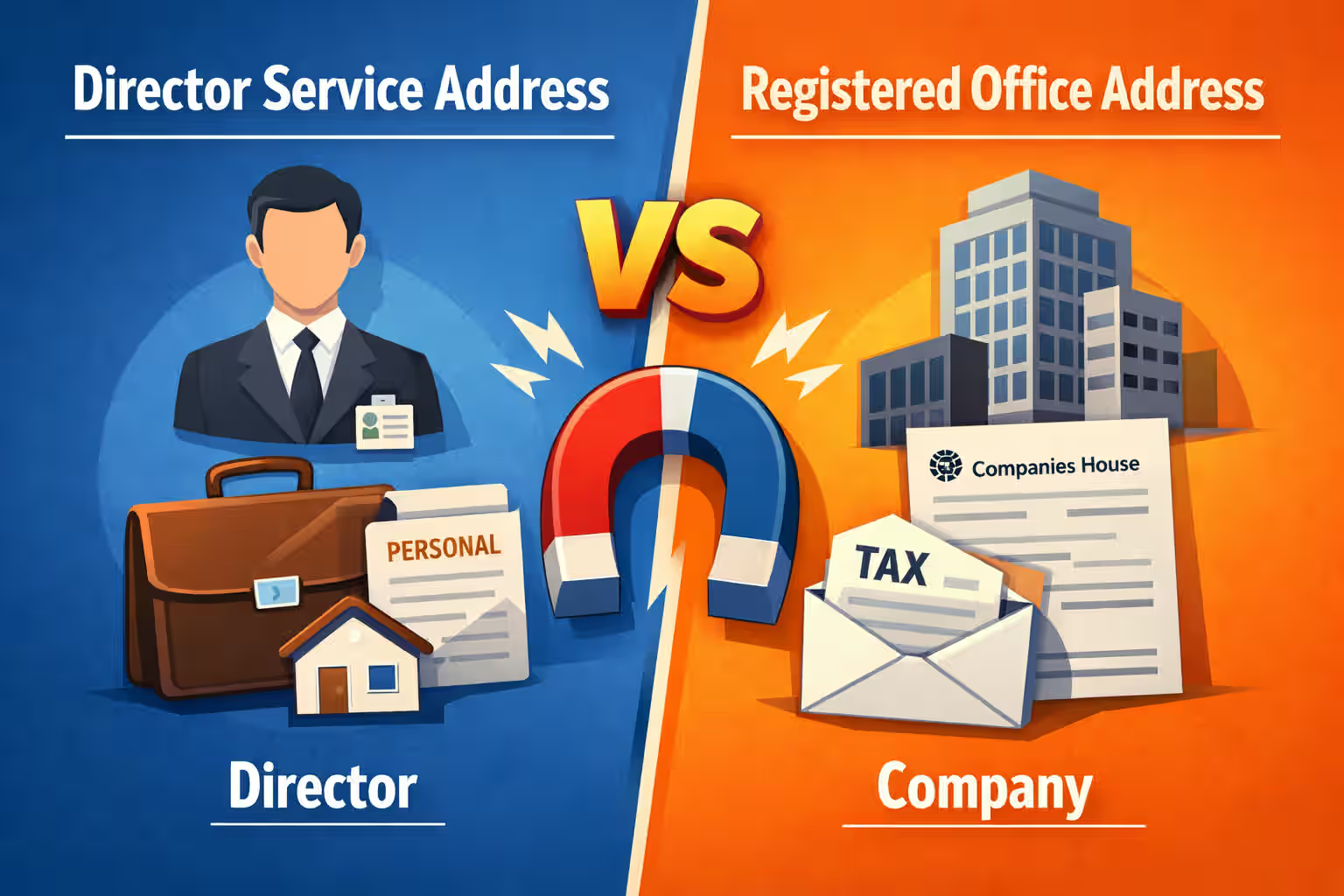
Each serves a different purpose.
Registered office
The registered office is the company’s official legal address on Companies House.
It receives:
- HMRC correspondence
- Government notices
- Statutory letters
Every UK company must maintain a compliant registered office address in London or elsewhere in the UK.
For founders building internationally managed companies, this address acts as the legal anchor of the business.
Director service address
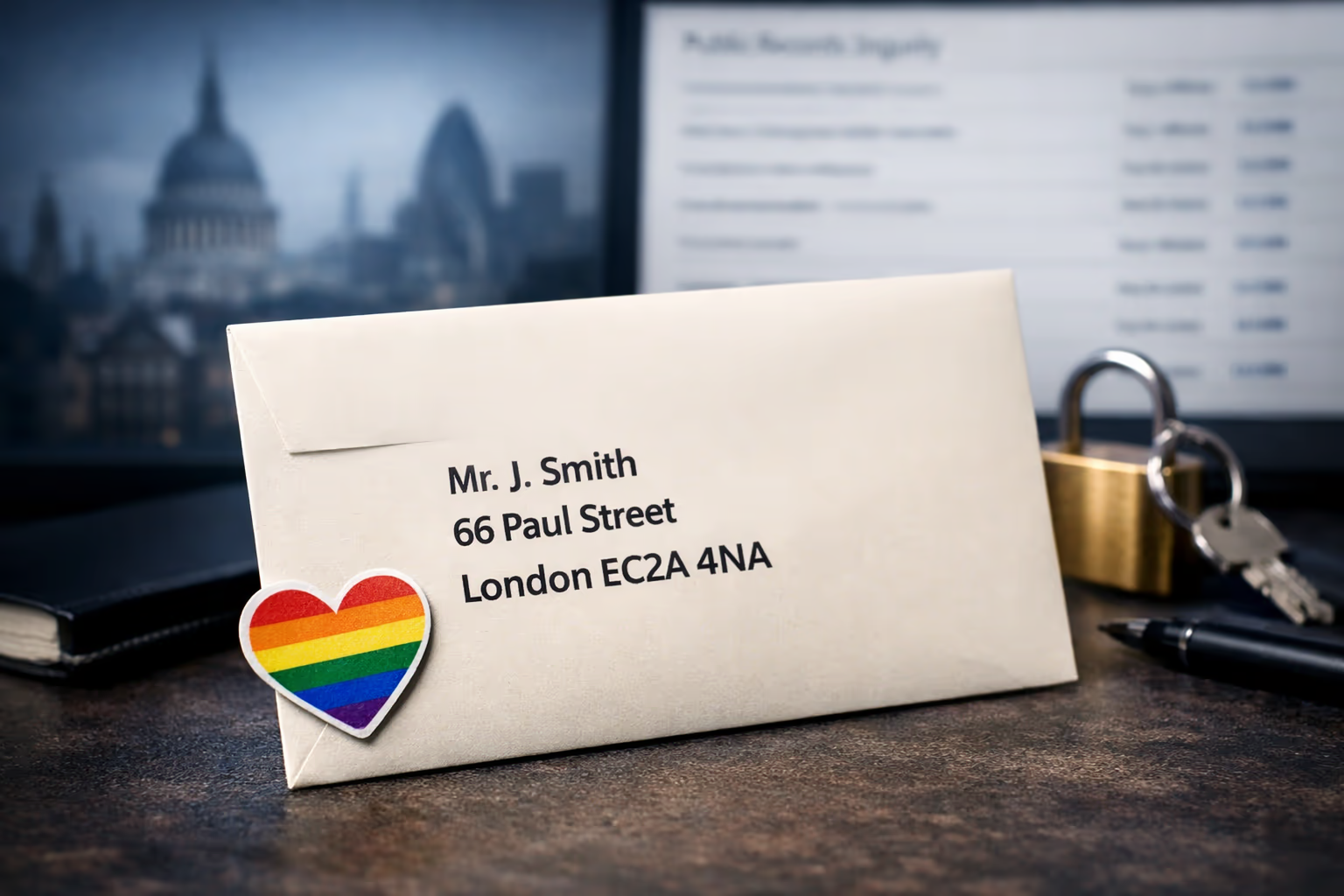
A service address allows directors to keep their home address private on public records.
Instead of publishing a personal address, founders can use a public service address for official filings.
This is common for:
- Remote founders
- International sellers
- Privacy-conscious entrepreneurs
Many founders choose a director service address in London to separate their personal life from their company records.
Mail handling
Mail handling becomes critical for remote operators.
Important letters may include:
- HMRC notifications
- Tax correspondence
- Bank verification letters
Without reliable scanning or forwarding, founders can miss time-sensitive notices.
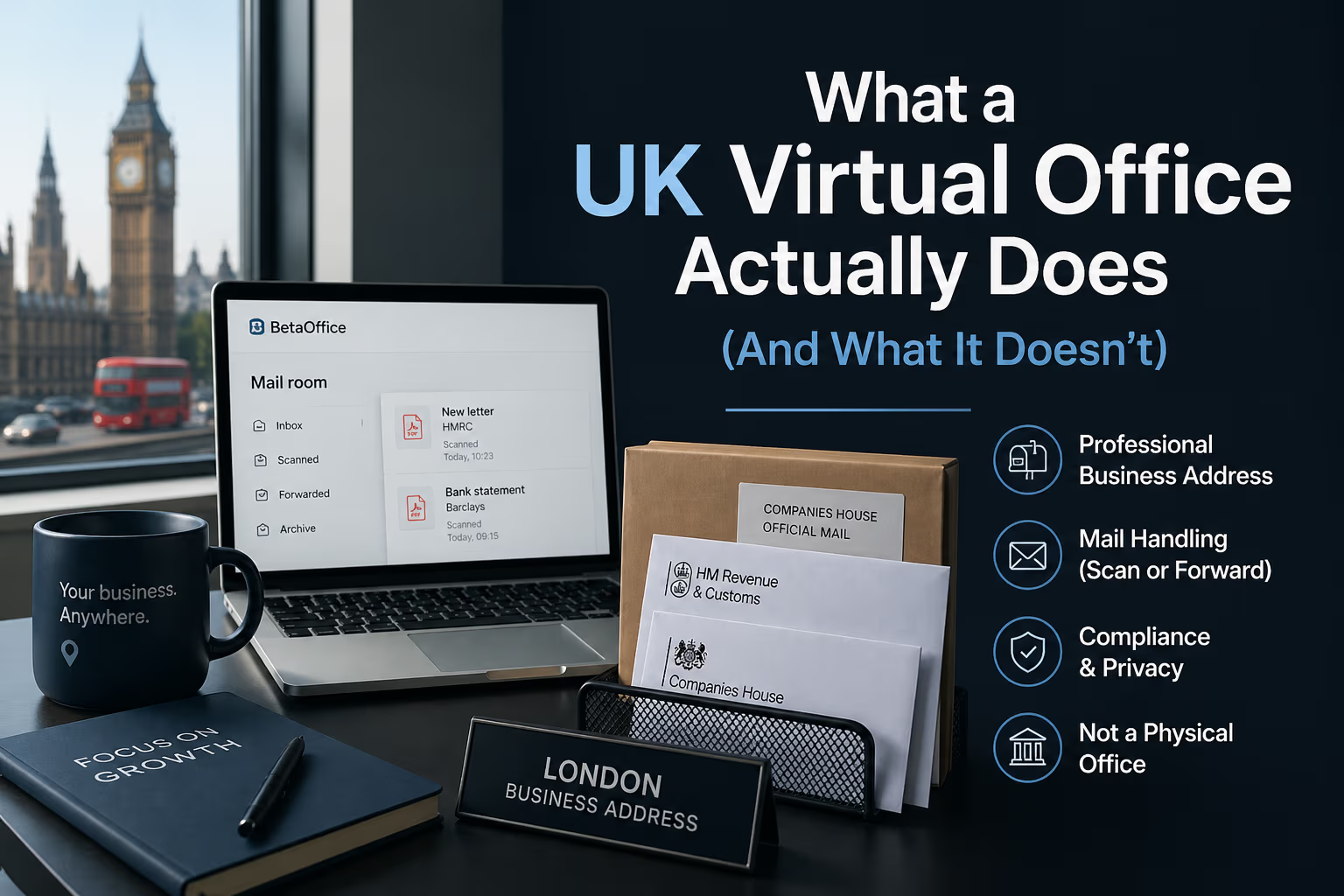
👉 In practice, many Amazon sellers rely on a London virtual office setup that gives them instant digital access to incoming mail.
Many international founders solve this by using a virtual office in London that scans and delivers their business mail digitally.
For Amazon sellers specifically, a dedicated guide explains how a UK address setup works in practice:
👉 UK address for Amazon sellers
Banking and payments for Amazon sellers
A major reason Amazon sellers use UK companies is compatibility with financial infrastructure.
Common payment setups include:
- Wise Business
- Payoneer
- Stripe (for DTC stores)
- UK business bank accounts
These integrations are widely supported for UK Ltd companies.
However, banks may still review the structure carefully, especially if founders operate internationally.
Tax considerations sellers often overlook
While forming a company is simple, taxation can become more complex.
Amazon sellers may encounter:
- Corporation tax obligations
- VAT requirements
- Cross-border VAT issues
- Marketplace reporting rules
Many sellers eventually work with accountants familiar with Amazon and e-commerce businesses.
When a UK company makes sense for Amazon sellers
A UK Ltd structure often works well when:
- Selling on Amazon UK or Europe
- Operating internationally
- Working with global suppliers
- Using payment providers that support UK companies
It may be less useful if the business operates entirely within another country’s domestic market.
Common misconceptions
Myth 1: “Amazon requires a UK company.”
Reality: Amazon does not require it, but the structure can simplify operations for international sellers.
Myth 2: “Setting up a company is the hard part.”
Reality: Formation is quick.
Operational infrastructure — banking, mail handling, compliance — matters more.
Myth 3: “Any address works.”
Reality: Companies must maintain a valid registered office address that can reliably receive official mail.
Mailbox-style setups sometimes cause issues later.
Many founders therefore choose a PO Box alternative in London that works for official filings and compliance.
A simple checklist for Amazon sellers
A UK company setup is usually workable if:
- A compliant registered office is in place
- Directors use a service address if privacy matters
- Official mail can be accessed digitally
- Payment providers support the structure
- An accountant understands cross-border e-commerce
Final takeaway
For many Amazon sellers, a UK Ltd company provides a stable and widely recognised business structure.
But the company itself is only one piece of the system.
What actually makes the setup work is the infrastructure around it:
- Address compliance
- Mail access
- Payment integration
- Tax management
When these pieces are configured correctly, founders can operate Amazon businesses from almost anywhere in the world.
🚀 Set up your UK business the right way
If you're building a UK company as an Amazon seller, the easiest way to avoid issues later is to start with a reliable address and mail setup.
✔ Registered office address
✔ Director service address
✔ Digital mail access
👉 You can explore a complete setup here:
London virtual office address