TL;DR
Stay compliant with a proper UK address
Use a real UK address, receive HMRC letters reliably, and manage your company remotely.
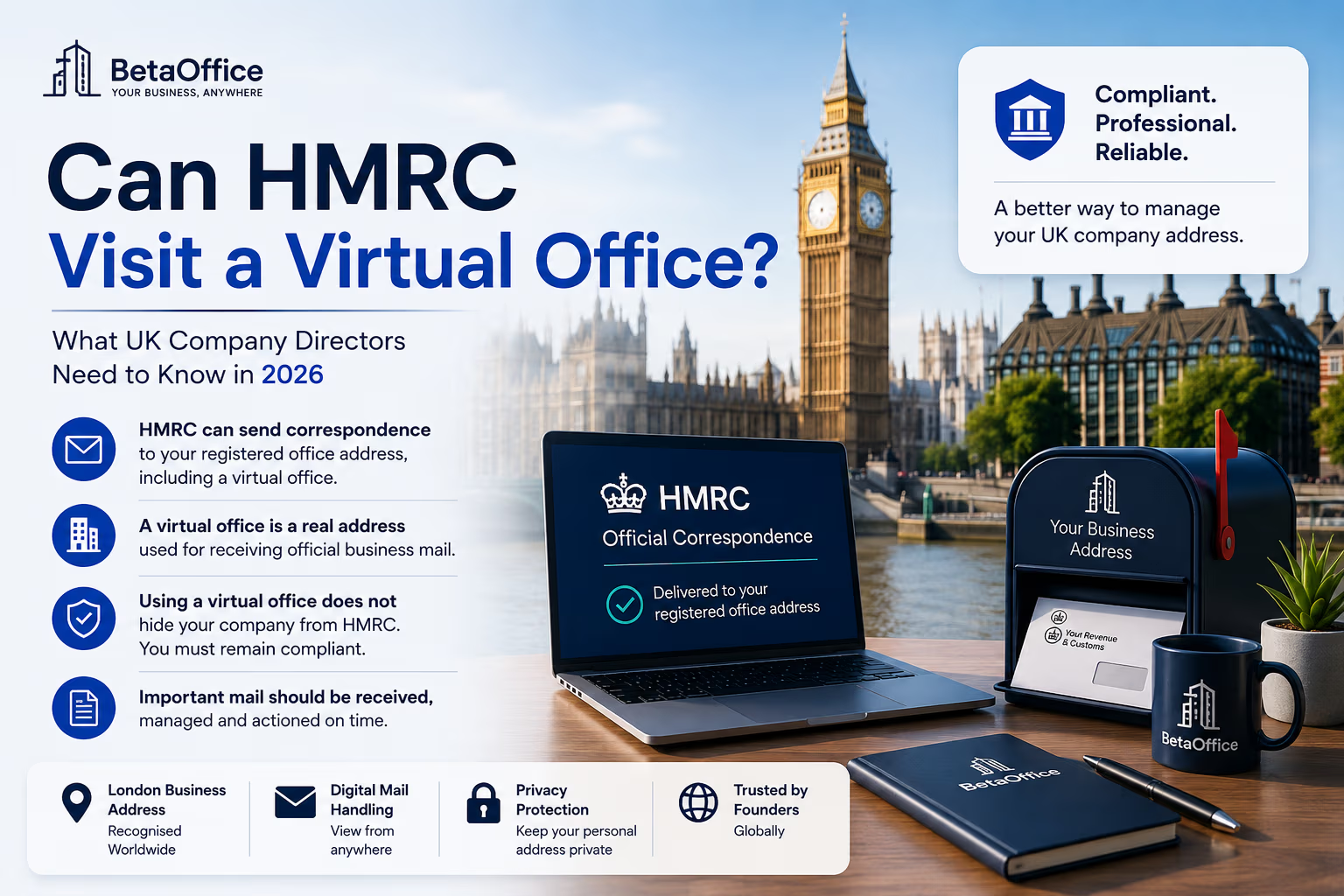
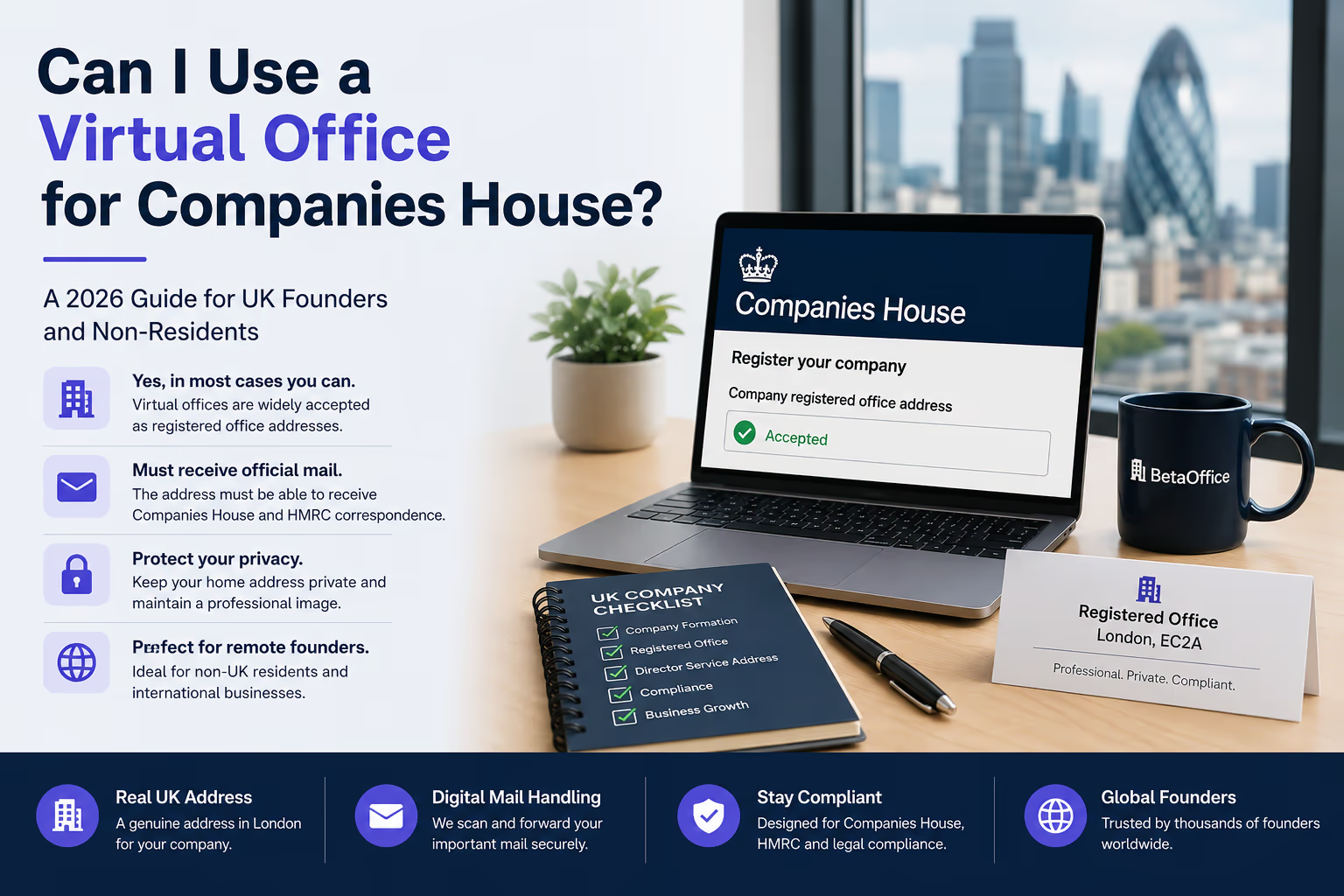
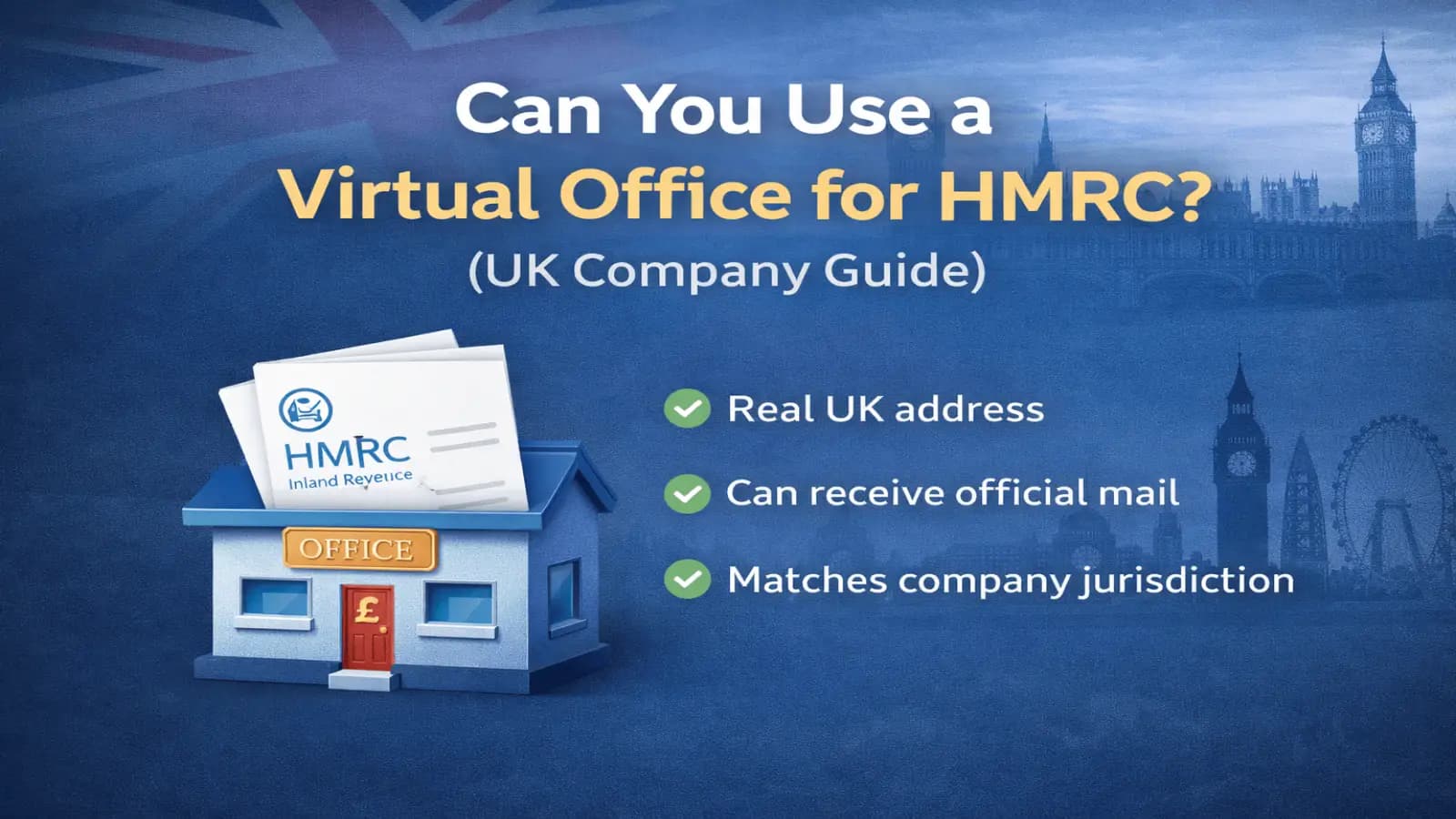
Yes — HMRC accepts virtual office addresses for your registered office and most correspondence.
But only if the address:
- Is a real UK street address
- Can receive official mail and acknowledge it — HMRC's internal guidance recognises staffed virtual office services specifically as a legitimate business activity
- Is monitored properly, with mail forwarded promptly
The exception most guides don't mention: if you register for VAT, HMRC asks for your Principal Place of Business — the address where you actually trade from. A virtual office generally can't be used for this specific field, even though it's perfectly fine as your registered office and for general HMRC correspondence. More on this below.
Why HMRC needs your address
HMRC uses your company address to send corporation tax letters, VAT notices, PAYE updates, compliance checks, and reminders and penalties. These are usually sent to your registered office address — the same address held on the Companies House public register.
Official source: https://www.gov.uk/register-for-corporation-tax
Does HMRC accept virtual offices?
Yes — and it's extremely common. Many UK companies, including a large number run by international founders, use a compliant virtual office as their registered office.
This isn't just industry practice — HMRC has published its own internal guidance (part of its Economic Crime Supervision Handbook) that specifically recognises virtual office services as a legitimate regulated activity, covering registered office, correspondence, and administrative address services. It's a strong signal that HMRC treats properly operated virtual offices as standard business infrastructure, not something to be viewed with suspicion.
Source: https://www.gov.uk/hmrc-internal-manuals/economic-crime-supervision-handbook/ecsh52250
Many founders use: 👉 Virtual Office London as their registered office.
The important exception: VAT's "Principal Place of Business"
This is the detail most virtual office guides skip, and it's worth understanding clearly.
For most HMRC purposes — corporation tax correspondence, PAYE, general notices — your registered office (which can be a virtual office) is exactly what HMRC needs.
But when you register for VAT, one of the fields HMRC asks for is your Principal Place of Business. This specifically means the address where your business actually operates from day to day — a home office, a warehouse, a shop, a studio. It is not the same thing as your registered office, and a virtual office address generally cannot be used to satisfy this specific requirement, because it doesn't represent where the business genuinely trades from.
In practice, this means:
- Your virtual office is fine as your registered office for VAT registration and correspondence
- Your Principal Place of Business field should reflect where you actually work — which for a fully remote business is often simply your home address, even if you don't want that address to be your public-facing registered office
If you're unsure which address to enter where, this is a good moment to check with an accountant, since getting it wrong on a VAT registration can cause delays or queries from HMRC later.
The key requirement for everything else
Beyond the VAT nuance above, HMRC doesn't care what type of address you use for general correspondence. It cares that:
✔ Letters arrive at a real, staffed location ✔ Someone can acknowledge or sign for recorded/tracked deliveries when needed ✔ Mail is forwarded to you promptly — ideally within a business day of arrival — so deadlines aren't missed ✔ The address is in the correct jurisdiction (England & Wales, Scotland, or Northern Ireland, matching your company's incorporation)
A tax reminder that never reaches you still legally counts as received in HMRC's eyes — the penalty that follows isn't something you can argue away by explaining that your provider was slow to forward it. This is exactly why mail handling reliability matters more than headline price when choosing a provider.
Why founders use virtual offices
Privacy
Your registered office is public on Companies House. Using a virtual office avoids exposing your home address indefinitely on the public record.
Remote operation
You can run your business from anywhere, using a UK address that satisfies statutory correspondence requirements.
Mail access
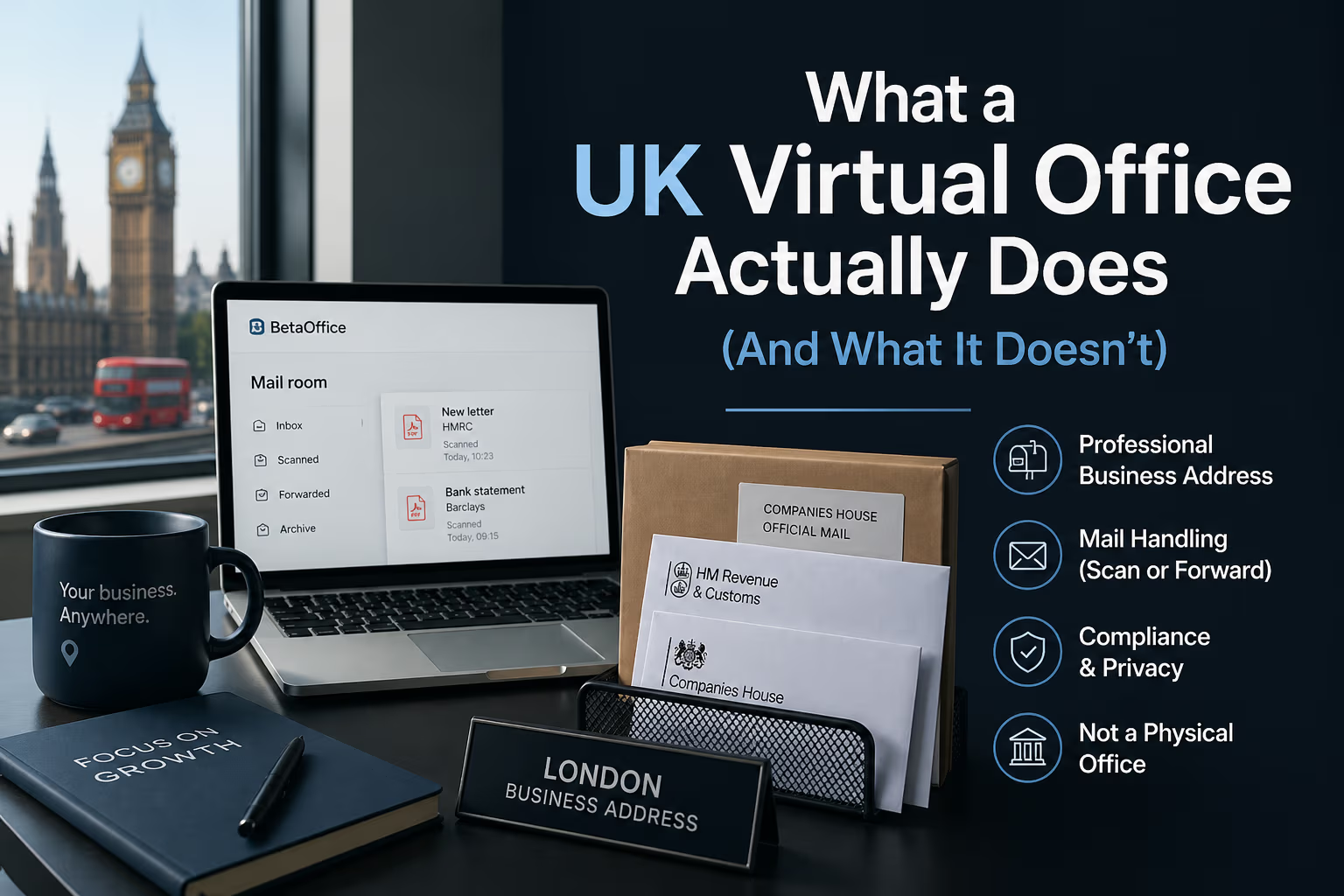
Reputable providers offer scanning, forwarding, and digital access to correspondence, so you're not dependent on being physically present to collect post.
Registered office vs other addresses
This is where most of the confusion happens.
| Address | Purpose |
|---|---|
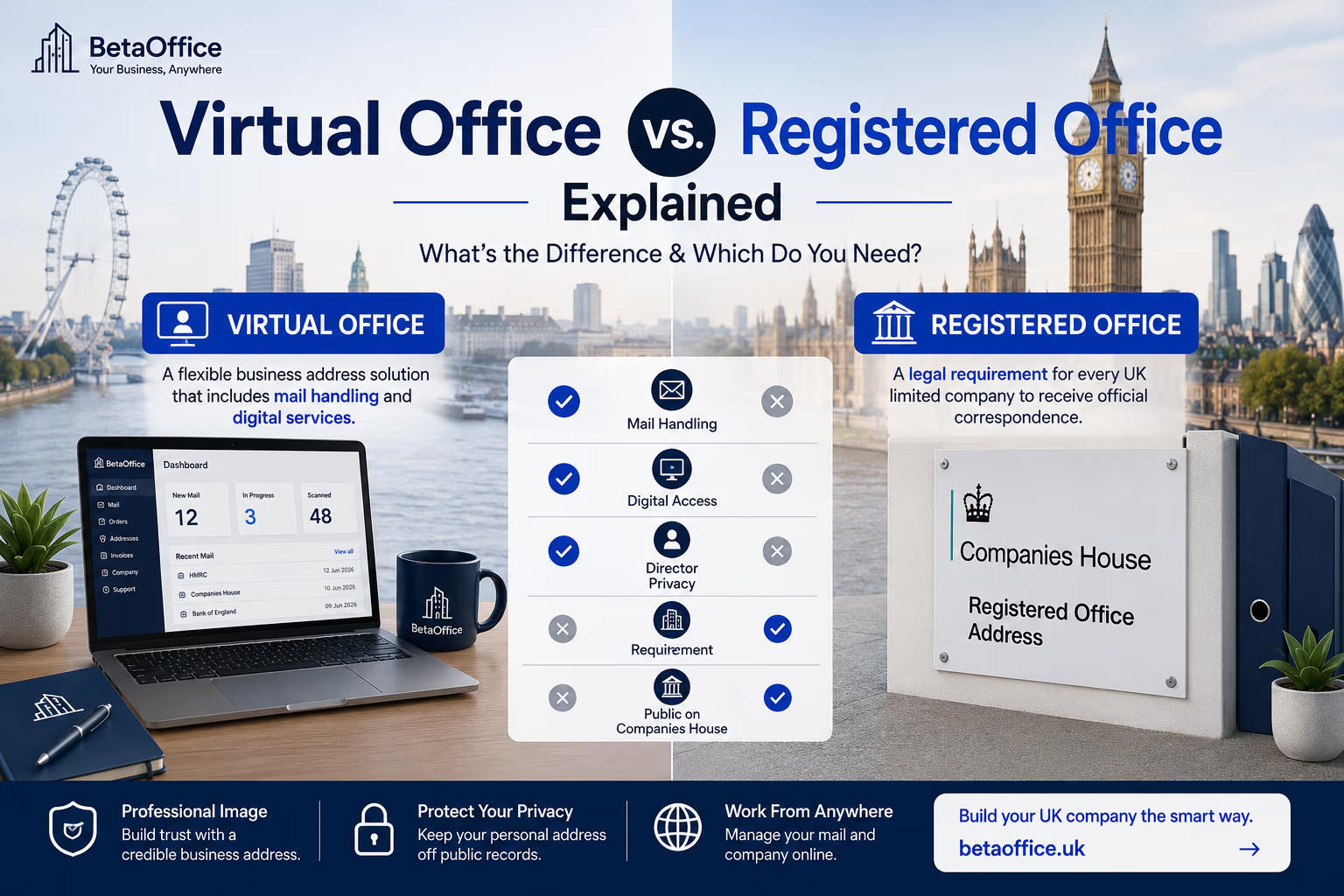
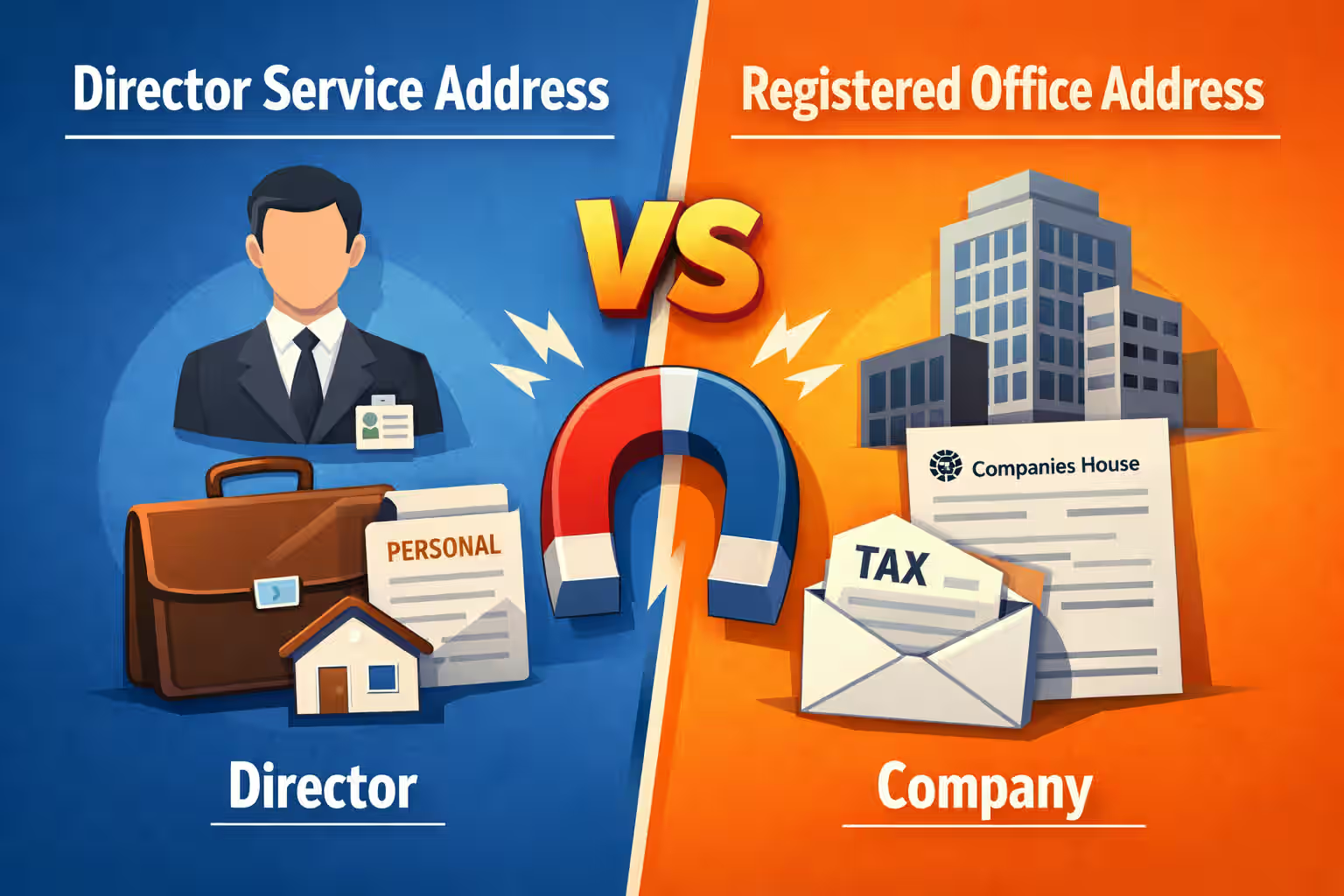
| Registered office | Companies House + most HMRC statutory mail |
| Director service address | Keeps a director's personal address off the public register |
| Trading / business address | Where you present your business publicly — website, invoices, marketing |
| Principal Place of Business (VAT-specific) | Where you actually operate from, day to day — cannot generally be a virtual office |
HMRC writes most correspondence to your registered office — with the VAT exception explained above.
👉 What is a registered office address?
What HMRC actually checks
HMRC does not require a physical office, staff employed at the location, or that business operations actually happen there — for a registered office or general correspondence address.
HMRC does require a valid, real UK address (meeting the Companies House "appropriate address" standard since the 2023 reforms), reliable mail handling that reaches you promptly, and — separately, for VAT specifically — an honest Principal Place of Business entry.
Non-UK founders (very common)
Many founders outside the UK use a UK registered office plus a director service address to operate remotely, fully compliant with HMRC and Companies House. If you're planning to register for VAT as a non-resident founder, the Principal Place of Business question still applies — worth flagging to your accountant early rather than discovering it at registration time.
👉 Open a UK company as a non-resident
What NOT to use
❌ PO Box only
Not accepted as a registered office or general HMRC correspondence address — there's no guarantee anyone is there to receive and process official documents, which fails the appropriate address standard both HMRC and Companies House apply.
Real risk founders ignore
The biggest problem isn't legality — virtual offices are well-established, HMRC-recognised infrastructure. The real risk is missing important letters: tax deadlines, penalty notices, verification requests, or VAT queries that sit unscanned for too long.
👉 This is why mail reliability matters more than price when choosing a provider — a cheap plan with slow, capped, or per-item-charged scanning can cost far more in missed deadlines than a well-run bundled service.
FAQ
Can I use a virtual office for VAT registration?
Yes, as your registered office — but not as your "Principal Place of Business" on the VAT registration form, which needs to reflect where you actually trade from. This is the one common exception worth knowing before you register.
Will HMRC visit the address in person?
Rarely — correspondence is the primary purpose. In rare cases involving compliance checks or legal document delivery, someone may need to sign for a recorded delivery, which is why a genuinely staffed provider matters.
Can I change my registered office address later?
Yes, via Companies House — it's free to file and typically takes effect within 24 hours of being accepted.
Can I use my accountant's address instead?
Yes, many businesses do this, though the same reliability and staffing considerations apply — confirm with your accountant that they're set up to handle this properly.
Does HMRC treat virtual offices as suspicious or as a compliance risk?
No. HMRC's own internal guidance recognises virtual office services as a legitimate, regulated business activity. The compliance risk comes from unreliable mail handling, not from the use of a virtual office itself.
Final takeaway
A virtual office is fully acceptable for HMRC correspondence and your registered office, and HMRC's own published guidance treats these services as legitimate infrastructure. The one nuance to keep in mind is VAT's Principal Place of Business requirement, which needs to reflect where you actually operate — not your registered office.
When done correctly, a virtual office lets you run your company remotely, stay compliant, and avoid missing important mail.
✅ Build a compliant UK setup
If you want:
✔ A real UK address ✔ An HMRC-compatible setup ✔ Digital mail access
Disclaimer: This article is for general information only and does not constitute legal or tax advice. VAT registration requirements can be specific to your circumstances — consult an accountant if you're unsure how to complete your Principal Place of Business field.