Updated for 2026 — based on real founder experiences and published bank onboarding requirements.
Short answer
Set up a UK business address that actually works
BetaOffice provides a compliant London address with AI-powered mail handling, designed for founders running companies remotely.
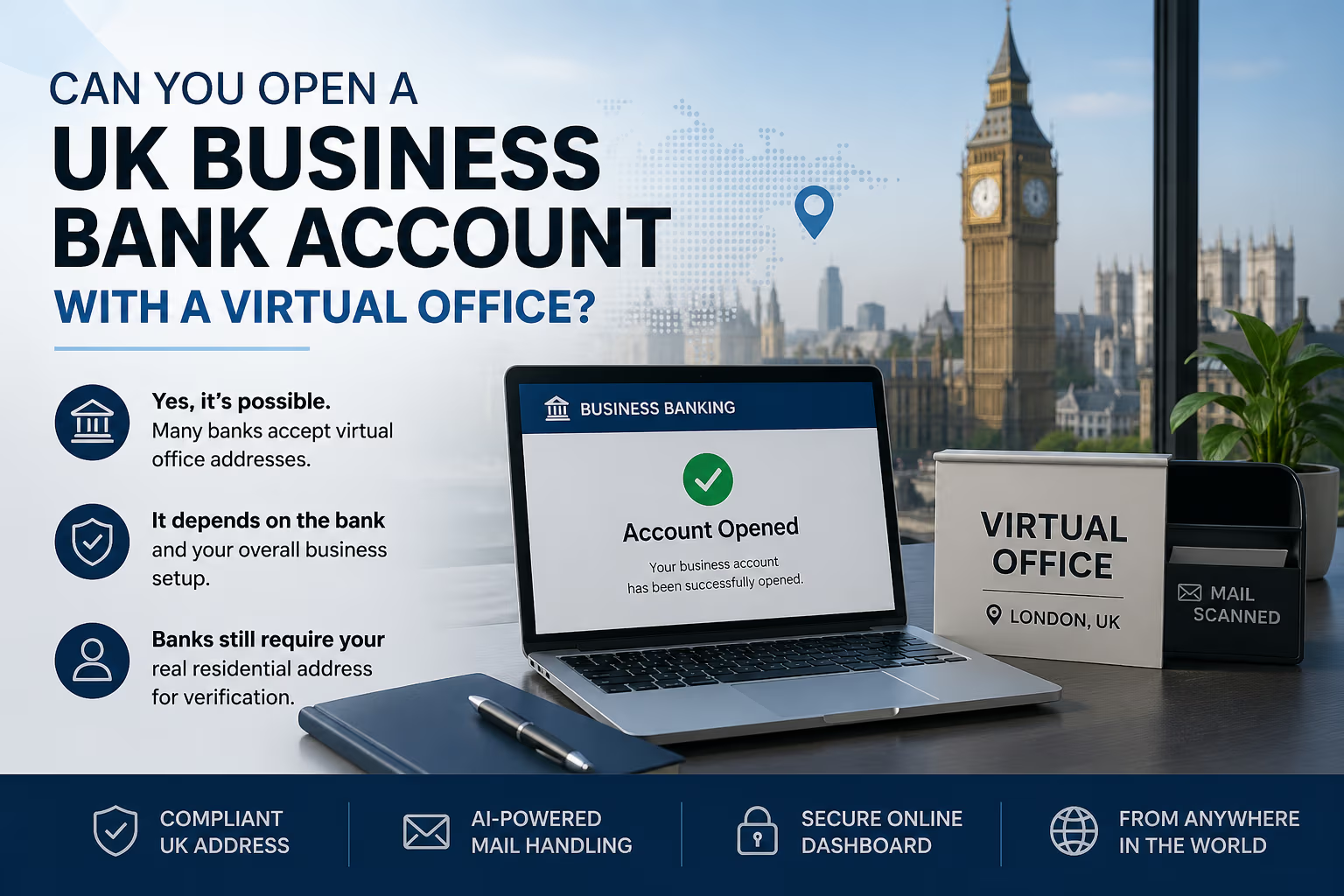
Yes — you can open a UK business bank account with a virtual office.
Most digital-first banks and Electronic Money Institutions (EMIs) — Tide, Wise Business, Revolut Business, ANNA, and Starling among them — accept a virtual office as your registered business address as standard practice, with no extra friction beyond normal verification.
Traditional high street banks — Barclays, HSBC, Lloyds, and NatWest — can be stricter, particularly for non-resident directors, sometimes requiring an in-person branch visit or additional documentation. It depends on the bank, your setup, and how your business is structured.
Importantly: most rejections have less to do with the address than people think.
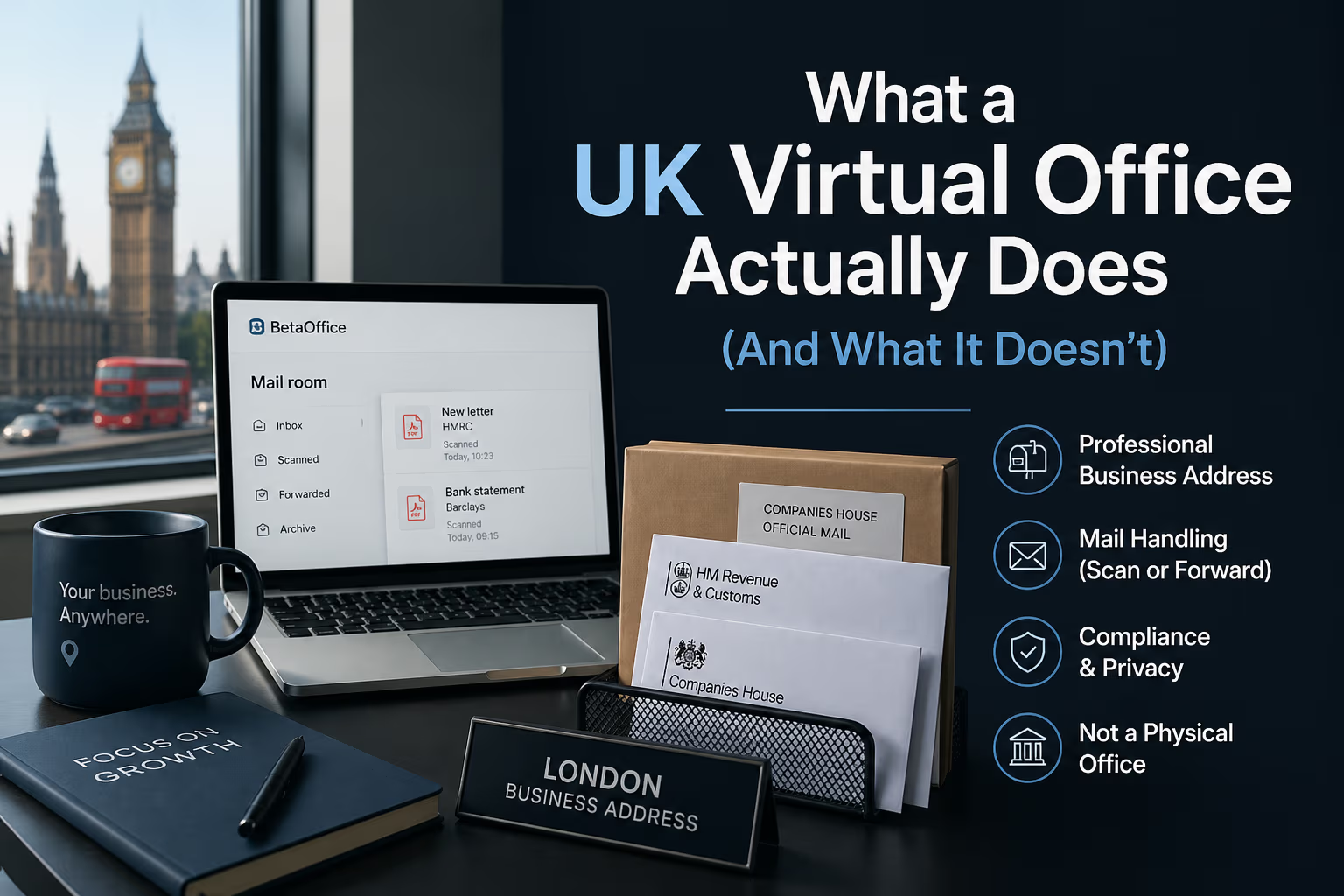
If you're still unclear on how virtual offices actually work, this breakdown helps: 👉 What a UK virtual office actually does
Why founders worry about this
If you search online or read community discussions, you'll see mixed experiences: some founders get approved without issues, others get rejected without clear explanation, and some banks seem flexible while others don't. This creates a common assumption — "banks reject virtual office addresses" — that isn't quite accurate. In reality, it's more nuanced than that, and which specific bank you apply to matters more than most founders assume.
Which banks actually accept a virtual office address?
| Bank / provider | Type | Typical stance on virtual offices |
|---|---|---|
| Tide | Digital / EMI | Fast digital onboarding, widely used by UK startups; accepts virtual addresses as standard |
| Wise Business | EMI | Regularly approves companies using virtual UK addresses, including non-resident directors |
| Revolut Business | Digital / EMI | Accepts virtual addresses; onboarding is instant/app-based |
| ANNA | Digital / EMI | Widely used by small companies with virtual office setups |
| Starling Bank | Digital bank (full licence) | Generally accommodating; some address-consistency checks apply |
| Barclays | High street | Accepts virtual offices in principle but has stricter overall onboarding, sometimes requiring a branch visit |
| HSBC | High street | More conservative; UK residency or in-person presence often expected, especially for new non-resident directors |
| Lloyds / NatWest | High street | Similar to HSBC — accepts virtual offices as a registered address, but overall onboarding is stricter than digital banks |
This isn't a guarantee of approval from any specific provider — risk assessment is individual to each application — but it reflects the general pattern founders report and each provider's published onboarding approach as of mid-2026. Confirm current requirements directly before applying.
The general rule: if you're a non-resident director or running a fully remote setup, start with the digital/EMI options. If you specifically want a full-service high street bank, be prepared for more documentation and, in many cases, an in-person step.
What actually happens in practice
From real founder experiences, outcomes vary. Some fintech banks accept virtual office setups easily; others ask for additional documents like a simple business plan; some require a separate trading or correspondence address from the registered office. There isn't a single universal rule — it depends on the bank's internal risk model, which weighs far more than just your address.
The biggest misunderstanding
A virtual office is not meant to replace your personal address. Banks still need to verify your identity and your residential address as part of KYC (Know Your Customer) checks — this is a legal requirement, not a bank preference.
So even if your company uses a UK business address, you will still need:
- A real home address (anywhere in the world — most EMIs accept international residential addresses; some traditional banks are stricter about this)
- Proof of address (a utility bill, bank statement, or equivalent — again, some banks require this to be a UK document, others accept international paperwork)
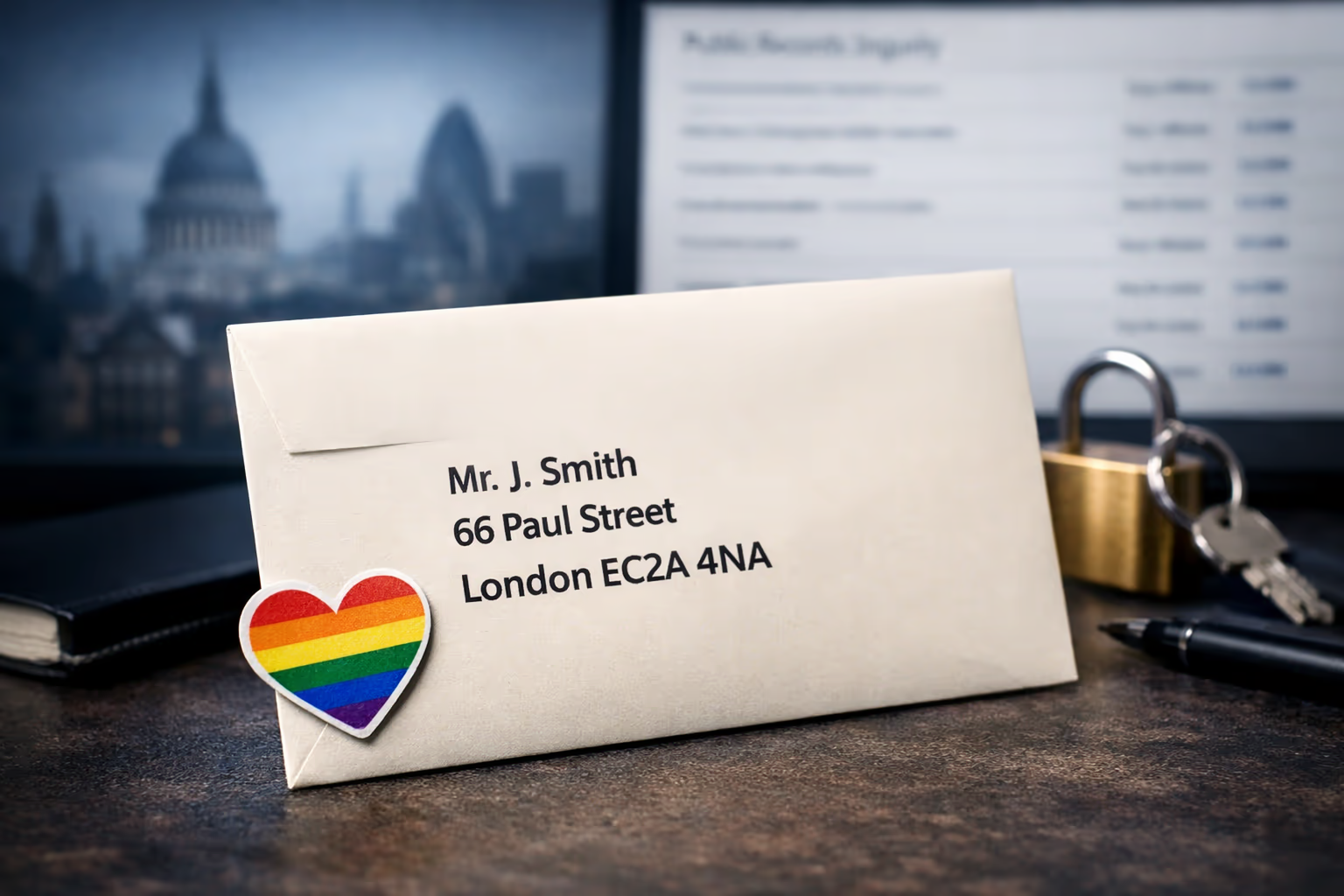
Keep this consistent. One of the most common, entirely avoidable rejection triggers is a mismatch between the address on your Companies House filing, the address you give the bank, and the address on your proof-of-address documents. If your registered office is in London but you tell the bank you're based in Manchester, that inconsistency alone can trigger a manual review or rejection.
What banks actually care about
Across different cases, banks focus more on what the business actually does, whether it operates internationally, expected transaction activity, and general risk signals, than on the address type itself. The address is just one small part of the overall decision — a real, consistent, compliant address helps, but it won't offset a business model or documentation set that raises other red flags.
A short, clear description of what your business does, who your clients are, and how you'll get paid is often requested during KYC — having this ready in advance speeds up approval regardless of which bank you choose.
Where problems usually happen
Issues tend to come up when:
- The address is used inconsistently across Companies House, the bank application, and supporting documents
- The business has no clear activity or a vague description of what it does
- The founder is overseas without supporting context (a business plan, evidence of clients, etc.)
- Expectations don't match how a specific bank evaluates risk (applying to a conservative high street bank as a new non-resident director, for example)
In many cases, rejection isn't about the virtual office itself — it's about the overall setup not being consistent or well-documented.
Fintech / EMI vs high street banks
Fintech and EMI providers (Tide, Wise Business, Revolut Business, ANNA, Starling):
- Often faster onboarding — sometimes account approval within hours
- Generally more accommodating of virtual offices and non-resident directors
- Can still reject automatically based on risk signals (high-risk industries, unclear business activity)
High street banks (Barclays, HSBC, Lloyds, NatWest):
- May require more documentation, a branch visit, or a call/interview
- Can be stricter for non-resident directors specifically
- Offer full-service banking (larger overdraft facilities, in-branch cash handling, relationship managers) that some businesses genuinely need despite the extra friction
Neither is objectively "better" — they evaluate risk differently, and the right choice depends on whether you need in-person branch services or are happy with an app-based account.
FAQ
Can I open a UK business bank account without visiting the UK in person?
Yes, generally, through digital banks and EMIs like Tide, Wise Business, Revolut Business, or ANNA — these are built around remote, app-based onboarding. Traditional high street banks are more likely to require an in-person visit, particularly for non-resident directors.
Does the bank need my home address if I already have a UK virtual office?
Yes. The virtual office satisfies your company's registered office requirement, but banks separately need to verify each director's personal identity, which requires a real residential address and proof of address, wherever in the world that is.
Will my application be rejected just because I used a virtual office?
Unlikely on its own. Most rejections trace back to inconsistent information, an unclear business description, or risk factors unrelated to the address type — not the fact that the address is a virtual office.
Which type of bank is best for a non-resident director?
Digital banks and EMIs are generally the more practical starting point for non-resident directors, since they're built for remote onboarding and tend to be more flexible about non-UK proof of address than traditional high street banks.
What documents should I prepare before applying?
Typically: proof of identity (passport), proof of residential address, your Companies House registration details, and a short description of what your business does, who your clients are, and how you'll be paid. Having these ready and consistent speeds up approval regardless of the bank.
What founders realise later
Most founders don't get rejected because they used a virtual office. They get rejected because the overall setup doesn't match what the bank expects — inconsistent addresses, an unclear business description, or applying to a bank whose risk model doesn't suit a remote, non-resident setup. Once business activity, identity verification, and expectations are all aligned, the address itself becomes far less important to the outcome.
Final takeaway
A virtual office does not automatically prevent you from opening a UK business bank account, and several major digital banks accept it as a standard part of onboarding. But it also doesn't guarantee approval on its own — it's one part of a larger system that includes consistent documentation, a clear business description, and choosing a bank whose risk model fits how you actually operate.
🚀 Set up your UK business the right way
If you're running a UK company (especially from abroad), the key is building a setup that works together:
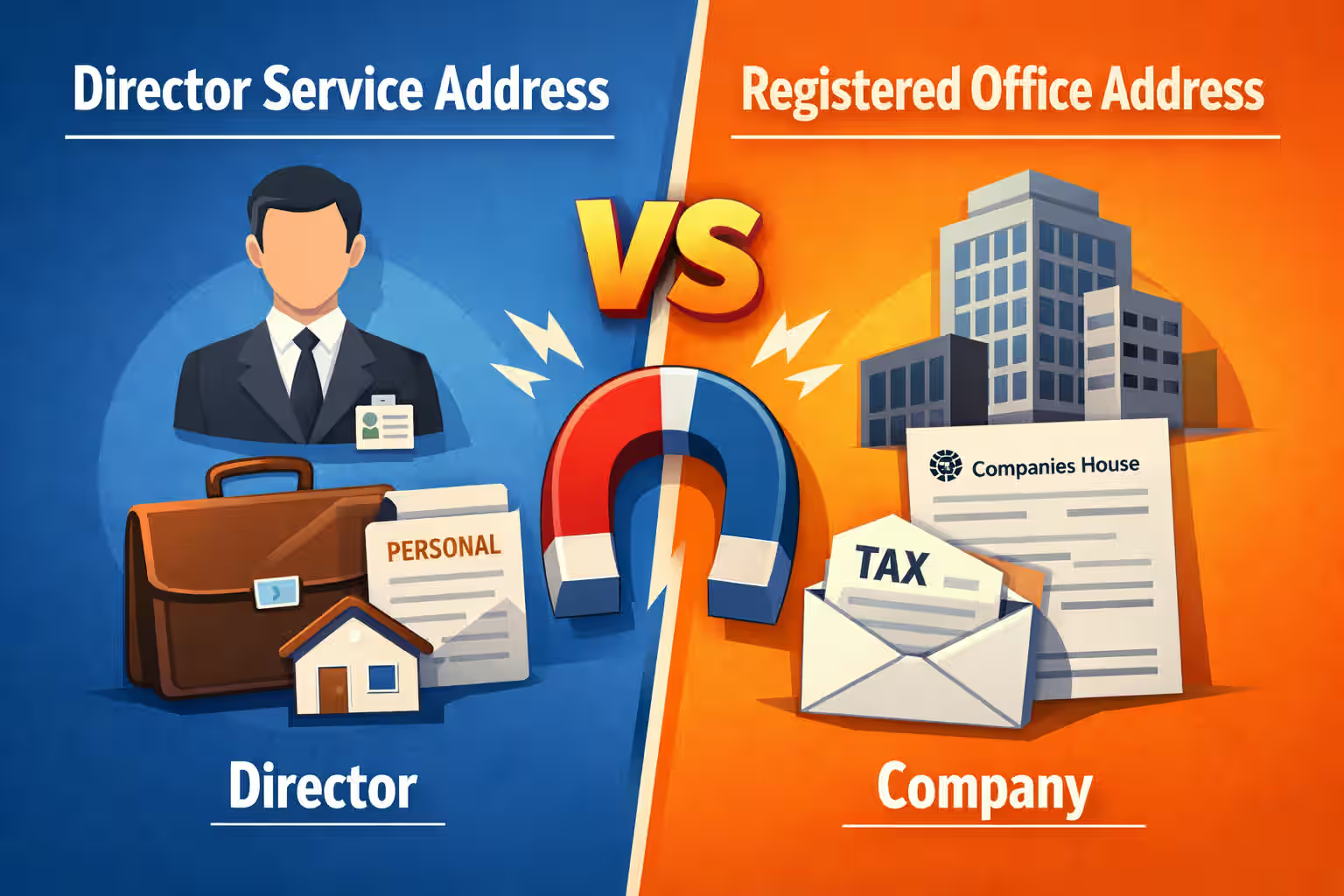
✔ Registered office address ✔ Director service address ✔ Reliable mail access
👉 Explore a complete setup here: London virtual office address
Related reads
– What a UK virtual office actually does – What nobody tells you about UK business addresses – Is a virtual office legal in the UK?
Disclaimer: Bank and EMI onboarding policies change and vary by individual application. This article is for general information only and does not constitute financial advice — always confirm current requirements directly with the provider before applying.