📦 Selling on Amazon with a UK company? Your business address setup matters more than many new sellers realise — and there's one specific verification scenario where a virtual office won't be accepted at all.
Overview
Need a UK business address for your Amazon seller company?
BetaOffice provides a London registered office address, director service address, and digital mail handling for marketplace sellers and remote founders.
One common question from marketplace sellers is: can I use a virtual office for Amazon?
The practical answer is: yes, for most purposes — but not for every purpose. A virtual office can be useful for UK company records, registered office use, business correspondence, director privacy, and general Seller Central verification. But there's one specific scenario, covered in detail below, where Amazon explicitly rejects virtual office documents outright.
Amazon's own registration guidance states that business verification can require an official document issued by a government agency showing company details such as legal name, registration number, registered address, directors, and current status.
This guide covers how Amazon seller address verification works, the one case where a virtual office genuinely won't work, where sellers most often go wrong, why consistency matters, and how UK Ltd sellers can build a cleaner setup.
The one thing most guides miss: "primary place of business" verification
This is the single most important nuance in this whole topic, and it's the reason some sellers with a virtual office end up stuck in a verification loop.
For most account and business verification, Amazon accepts a registered office or correspondence address, including a properly staffed virtual office. But if Amazon specifically asks you to establish your UK "primary place of business" — most commonly during a VAT or tax establishment review — its own guidance states plainly:
"Documents for locations that are virtual offices or mail forwarding locations do not qualify as proof that you have a UK primary place of business address. You will need to provide proof of a physical address."
This is a distinct check from general Seller Central identity verification, and it trips up real sellers regularly — UK seller forums include first-hand accounts of accounts being deactivated because the registered company address (a virtual office) didn't match a physical "operating address," and Amazon would not accept updated virtual office documents to resolve it.
What this means practically: a virtual office is generally fine as your registered office and for day-to-day Seller Central business address details. But if Amazon asks you specifically to prove your primary place of business — which tends to come up around VAT establishment reviews for sellers who look like they might not genuinely operate from the UK — you'll need a document tied to an actual physical location (a lease, a utility bill for a real premises, or similar), not a virtual office letter. This is worth knowing before it happens, not after your account is on hold.
Why Amazon Cares About Your Address
Amazon is a marketplace with strict seller verification requirements. It needs to understand who owns the seller account, what legal entity is selling, where the business is based, whether documents match account details, and whether the seller can be contacted.
Amazon Seller Central allows sellers to update business address information through Account Info, confirming that business address details are a core part of the seller account profile. For this reason, your business address should not look random, inconsistent, or unsupported by documents.
How Amazon's address verification actually works
Beyond document checks, Amazon commonly verifies a seller's physical address by mailing a postcard containing a unique verification code to the address on file. You then enter that code into Seller Central to complete verification. This is a specific, concrete mechanic worth planning for — it means whatever address you register needs genuinely reliable mail handling, since a missed or delayed postcard stalls your account setup.
If you're using a virtual office, confirm your provider forwards or flags time-sensitive items like this quickly, rather than batching scans on a slower schedule.
Can a Virtual Office Be Used for an Amazon Business?
A virtual office can be useful as part of an Amazon seller business setup. Many sellers use virtual offices because they operate remotely, sell through FBA, don't need a physical shop, don't want to publish a home address, and need a professional UK company address.
However, this doesn't mean every virtual office will work smoothly in every Amazon verification scenario — as the primary place of business exception above shows. Amazon may ask for documents that match the details in Seller Central, and in Amazon seller forum guidance, sellers are told explicitly to ensure the name, address, and business address in Seller Central matches the documents provided during verification.
Registered Office vs Amazon Business Address vs "Primary Place of Business"
These are three related but distinct concepts, and conflating them is where most confusion happens.
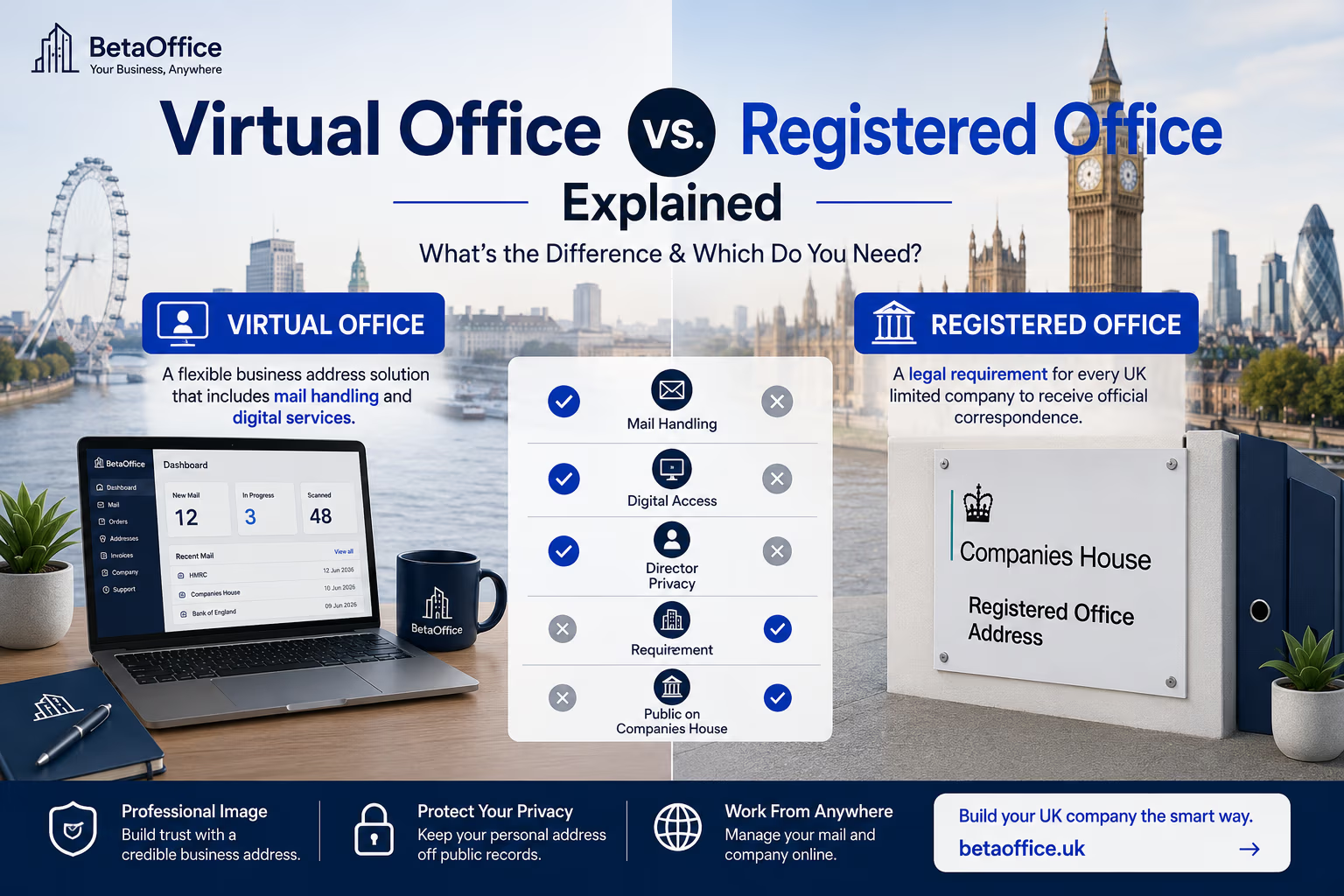
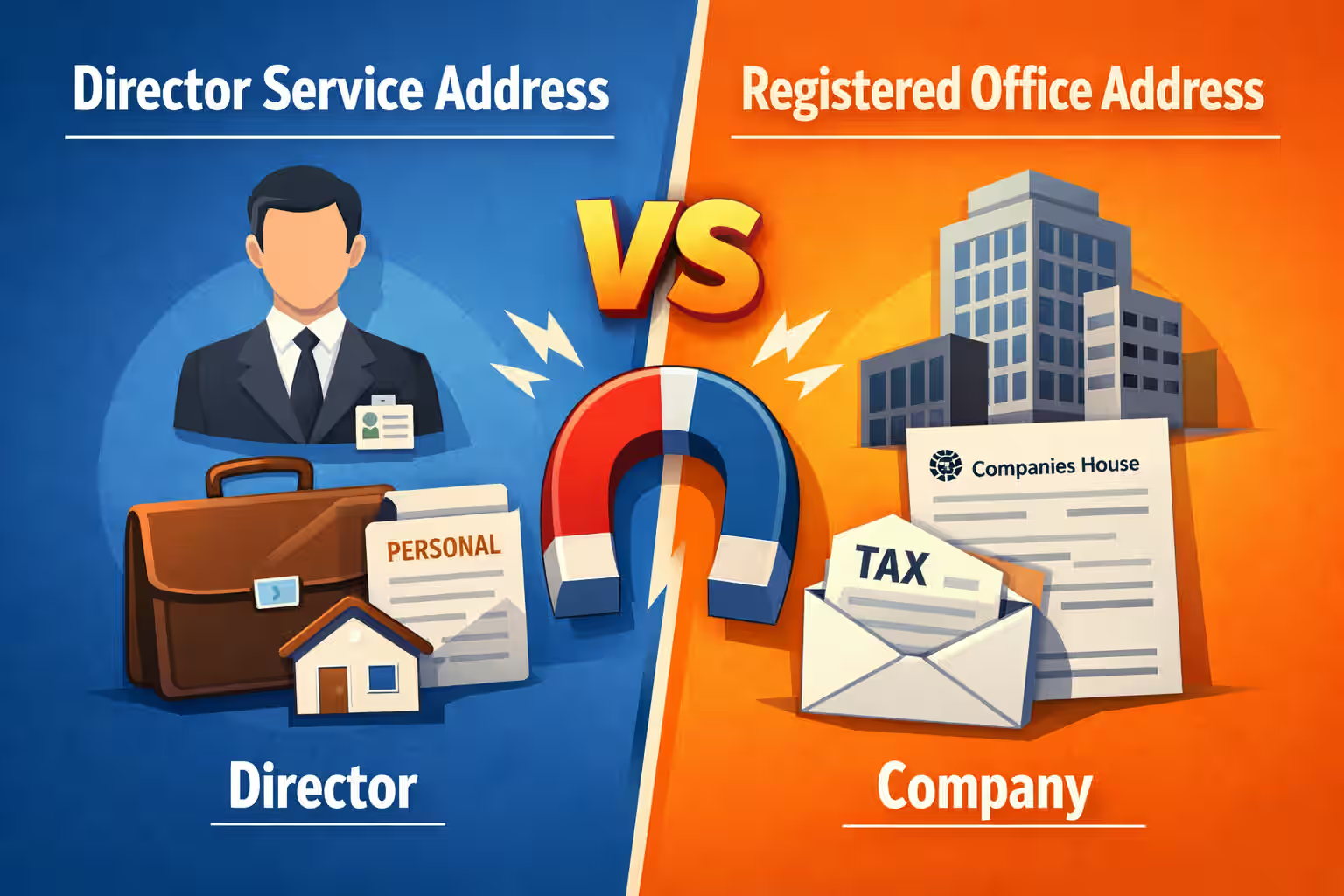
Registered Office Address
Your official company address for Companies House and HMRC, appearing publicly on Companies House. A UK Ltd company can use a registered office service if the address is suitable for official correspondence.
👉 Can I Use a Virtual Office for Companies House?
Amazon Business Address
The address shown or used inside Amazon Seller Central for verification, business profile details, and marketplace compliance. A virtual office generally works here.
Primary Place of Business (the exception)
Where Amazon believes your business genuinely operates from, specifically relevant for VAT/establishment reviews. This is where a virtual office is explicitly not accepted as proof — you need a document tied to a physical location.
The key issue throughout all three is consistency. If your Amazon address, Companies House address, bank documents, and verification documents all point in different directions, Amazon may ask questions — and if you're ever asked for primary place of business proof specifically, your existing virtual office paperwork won't resolve it.
Why Amazon Sellers Use Virtual Offices
Privacy — many sellers, including home-based sellers, side-hustle founders, non-UK residents, FBA sellers, and those in shared accommodation, don't want their home address public.
Professional image — a real London business address can look more credible than a residential address when dealing with suppliers, banks, payment providers, customers, and business partners.
Remote operations — many Amazon sellers never need a physical office, relying on FBA, 3PL warehouses, and freight forwarders instead. A virtual office supports the company administration layer while logistics are handled separately.
What Documents Might Amazon Request?
Amazon verification requirements vary by seller type, marketplace, country, and account history. Possible documents include a company registration document, business licence where applicable, identity document, proof of address, bank account document, utility bill or official document, and tax or government document.
Keep all of these consistent and ready before opening or changing a seller account — and be aware that a utility bill for a virtual office address may not exist in your name, which is itself a common friction point worth asking your provider about in advance.
Common Mistakes Sellers Make
Using mismatched addresses. This is one of the biggest problems — avoid different addresses across Amazon Seller Central, Companies House, bank statements, invoices, your website, and supplier records.
Using a weak mailbox-style address. Some mailbox-style setups are flagged during verification. A real business address with mail handling is usually stronger than a low-quality mailbox or PO Box-style service.
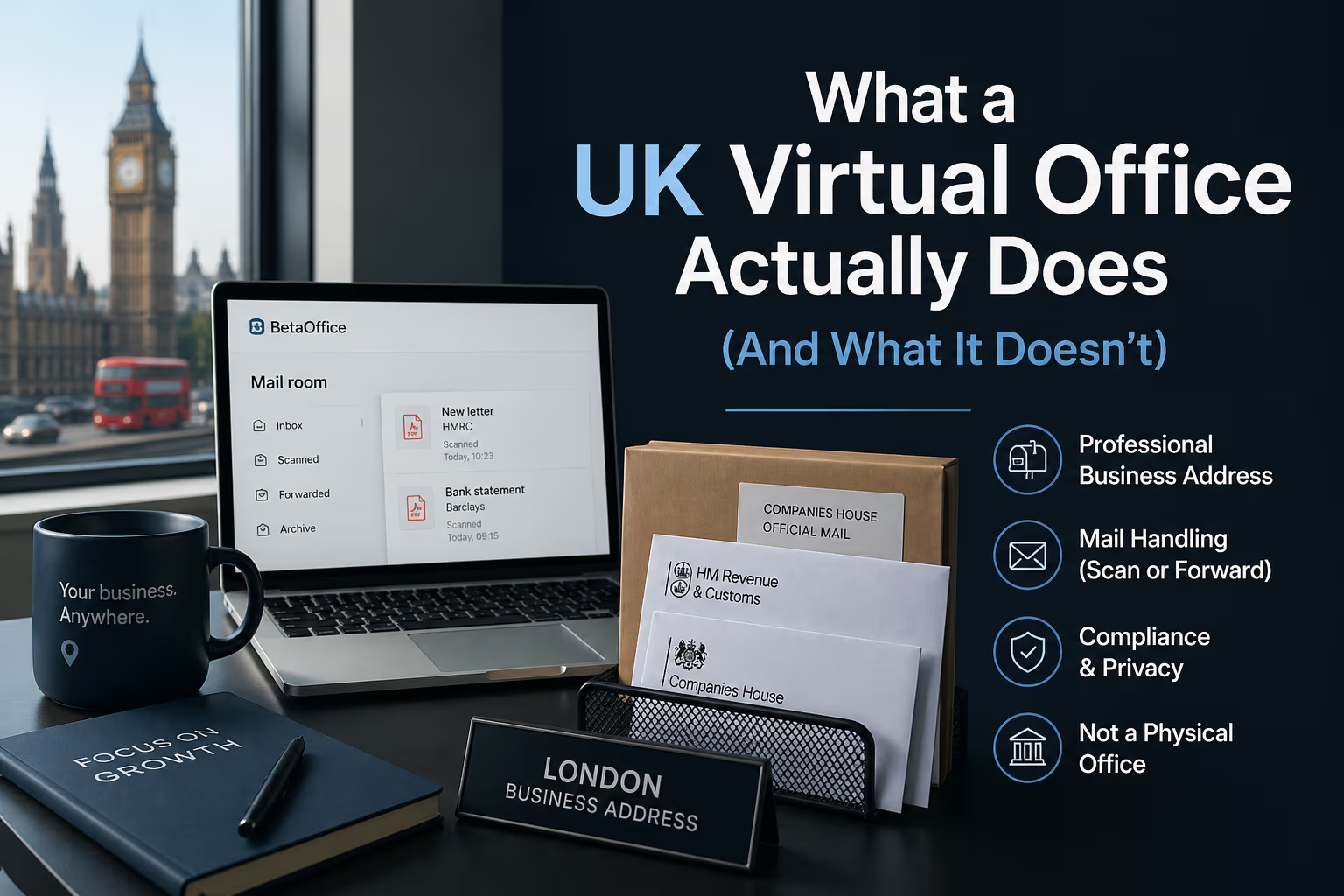
Assuming every virtual office is equal. A better setup includes a real business address, registered office support, digital mail handling, reliable correspondence processing, clear documentation, and long-term stability.
Not planning for the primary place of business exception. As covered above — if you're ever specifically asked for this, having only virtual office paperwork ready will delay resolution.
Ignoring customer-facing address visibility. Depending on marketplace rules and seller profile settings, some business information may be visible to customers, which is another reason many sellers prefer not to expose a home address.
Do Amazon Sellers Need a Warehouse Address?
Not always. Many Amazon sellers use FBA, meaning Amazon stores and ships inventory, or rely on third-party logistics providers, freight forwarders, or suppliers shipping direct. A virtual office is not a warehouse — it's for business correspondence and company address use. If you need inventory storage, returns handling, or fulfilment, you'll need a separate logistics solution.
Can Non-UK Residents Use a UK Address for Amazon?
Many non-UK residents operate UK companies and sell through online marketplaces. A typical setup includes a UK limited company, registered office address, director service address, UK business bank account or payment setup, an Amazon Seller Central account, and a freight/fulfilment solution.
Recommended reading: 👉 UK Address for Non Residents 👉 Best Registered Office Address for Non-UK Residents 👉 How to Open a UK Company as a Non-Resident
Best-Practice Setup for Amazon Sellers
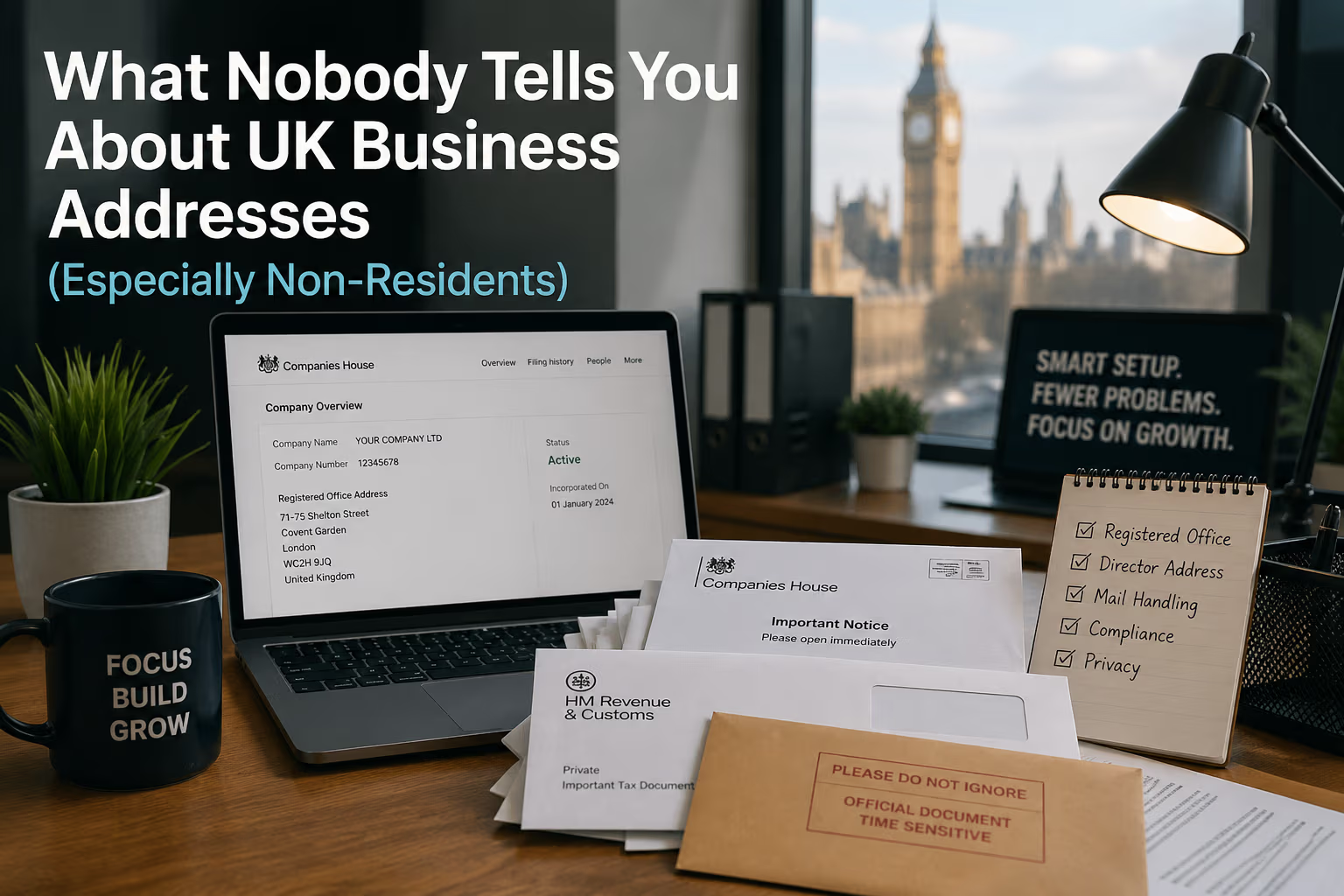
A cleaner setup usually looks like this: company formed correctly, registered office address active, director service address active, business bank account opened, Amazon Seller Central details matching company records exactly, website or brand page using consistent company details, important mail (including verification postcards) received and scanned promptly, and documents kept ready for verification — including an awareness of what you'd need if specifically asked for primary place of business proof.
This doesn't guarantee Amazon approval, but it gives you a far more organised foundation.
Should Amazon Sellers Use a London Address?
A London address isn't legally required. However, many sellers choose London because it supports credibility, privacy, professional image, international trust, and a stable UK company presence.
👉 UK Address for Amazon Sellers may be a good starting point.
FAQ
Can I use a virtual office for my Amazon registered business address?
Yes, generally — a properly staffed virtual office is accepted for registered office use and standard Seller Central verification, provided your details are consistent across documents.
Will Amazon ever reject a virtual office outright?
Yes, specifically if you're asked to prove your UK "primary place of business" — Amazon's own guidance states virtual office and mail-forwarding documents don't qualify for this specific check, and you'll need proof tied to a physical location instead.
How does Amazon verify my address?
Commonly by mailing a postcard with a unique code to your registered address, which you enter into Seller Central. Reliable, fast mail handling matters for this step.
Can I use a PO Box for Amazon?
No — Amazon does not accept PO Boxes or mailbox-style addresses as they can't be verified as genuine business locations.
What happens if my registered address and operating address don't match?
This is one of the most common causes of verification delays and account holds reported by sellers. Keep every address you give Amazon consistent with your Companies House and bank records, and be prepared to explain or resolve any mismatch quickly.
Do I need a warehouse to sell on Amazon?
Not necessarily — FBA sellers often use Amazon fulfilment or third-party logistics instead of their own warehouse.
Can non-UK residents sell on Amazon with a UK company?
Yes, many do, but the same Amazon verification requirements — including the primary place of business exception — still apply regardless of where the director lives.
Final Takeaway
A virtual office can be part of an Amazon seller setup, but it should not be treated as a universal shortcut around verification — specifically, it will not satisfy Amazon's UK "primary place of business" check if you're ever asked for it.
The safest approach is to keep your Seller Central details, company records, bank details, website details, and verification documents fully consistent, and to know in advance what you'd provide if Amazon specifically asks for proof of a physical operating address.
For most day-to-day purposes, a professional virtual office address still helps create a more credible, private, and organised UK company presence.
🚀 Build a cleaner UK setup for your Amazon seller business
Need a London business address?
✔ Registered Office Address ✔ Director Service Address ✔ Digital Mail Handling ✔ AI Mail Summaries ✔ Built for Marketplace Sellers
Explore: 👉 UK Address for Amazon Sellers 👉 Virtual Office London 👉 Registered Office Address London 👉 UK Address for Non Residents
Disclaimer: This article is for general information only and does not constitute legal, tax, financial, or Amazon compliance advice. Amazon verification requirements change and approval depends on Amazon's own review process — always check current guidance in Seller Central Help before relying on this article for a specific verification issue.