🌍 Thinking about starting an import export business in the UK?
International trade remains one of the most accessible ways to build a scalable business without manufacturing products yourself.
Overview
Build your import export company on a professional foundation
BetaOffice provides a London registered office address, director service address, and digital mail handling for founders trading internationally.
An import export business buys products in one country and sells them in another.
Many founders start by:
- Importing products into the UK
- Exporting UK products overseas
- Acting as a distributor
- Working as a wholesale intermediary
- Supplying ecommerce businesses
Unlike manufacturing businesses, you do not necessarily need:
- Factories
- Warehouses
- Large teams
Many successful import export businesses begin with:
- A limited company
- Supplier relationships
- Trade knowledge
- A professional business presence
This guide covers:
- Company formation
- Importing and exporting basics
- Customs requirements
- VAT considerations
- Finding suppliers
- Finding customers
- Compliance obligations
Let's begin.
1) Choose Your Business Structure
Sole Trader
Possible for very small operations.
Advantages:
- Simple setup
- Lower administration
Disadvantages:
- Personal liability
- Less credibility with suppliers
- Less attractive for larger contracts
Limited Company
Most import export businesses choose a limited company.
Benefits include:
- Limited liability
- Better credibility
- Easier international trading
- Better supplier relationships
- More professional image
Official guidance:
https://www.gov.uk/limited-company-formation
Many founders start with a UK limited company from day one.
👉 How to Open a UK Company as a Non-Resident
2) Decide What You Will Import or Export
This sounds obvious, but many founders fail here.
Avoid choosing products solely because they appear cheap.
Instead focus on:
- Market demand
- Profit margins
- Competition
- Shipping costs
- Customs requirements
- Product restrictions
Popular categories include:
- Consumer electronics
- Clothing
- Homeware
- Beauty products
- Food products
- Industrial supplies
- Automotive parts
The best opportunities often come from niche markets rather than highly competitive products.
3) Find Reliable Suppliers
Supplier quality can determine whether your business succeeds.
Look for suppliers who offer:
- Consistent quality
- Reliable communication
- Export experience
- Stable production capacity
- Clear documentation
Common sourcing destinations include:
- China
- Turkey
- India
- Vietnam
- Poland
- Germany
Before placing large orders:
- Request samples
- Verify company details
- Check references
- Review certifications
4) Understand Customs and Duties
Many new founders underestimate this area.
Depending on the product, you may need to consider:
- Import duties
- Customs declarations
- Commodity codes
- VAT
- Product certifications
Failure to understand customs procedures can quickly become expensive.
Official guidance:
https://www.gov.uk/import-goods-into-uk
https://www.gov.uk/export-goods
5) Register for VAT When Appropriate
VAT can become important quickly.
You may need to consider:
- UK VAT
- Import VAT
- Export VAT rules
- International customers
Official VAT guidance:
https://www.gov.uk/vat-registration
For many growing import export businesses, professional accounting advice becomes valuable early on.
6) Build a Professional Business Presence
International suppliers and customers often check your company before doing business.
Important trust signals include:
- Company website
- Business email
- Companies House profile
- Business address
- Professional branding
Many international founders choose:
👉 Registered Office Address London
or
to establish a stronger UK business presence.
7) Do You Need a London Business Address?
No.
However, many import export businesses choose one because:
- It looks professional
- It creates trust
- It supports international credibility
- It separates personal and business identities
This is particularly common among overseas founders.
👉 Do I Need a London Address for a UK Ltd Company?
8) Can Non-UK Residents Start an Import Export Business?
Yes.
Many import export founders never live in the UK.
A common setup includes:
- UK Limited Company
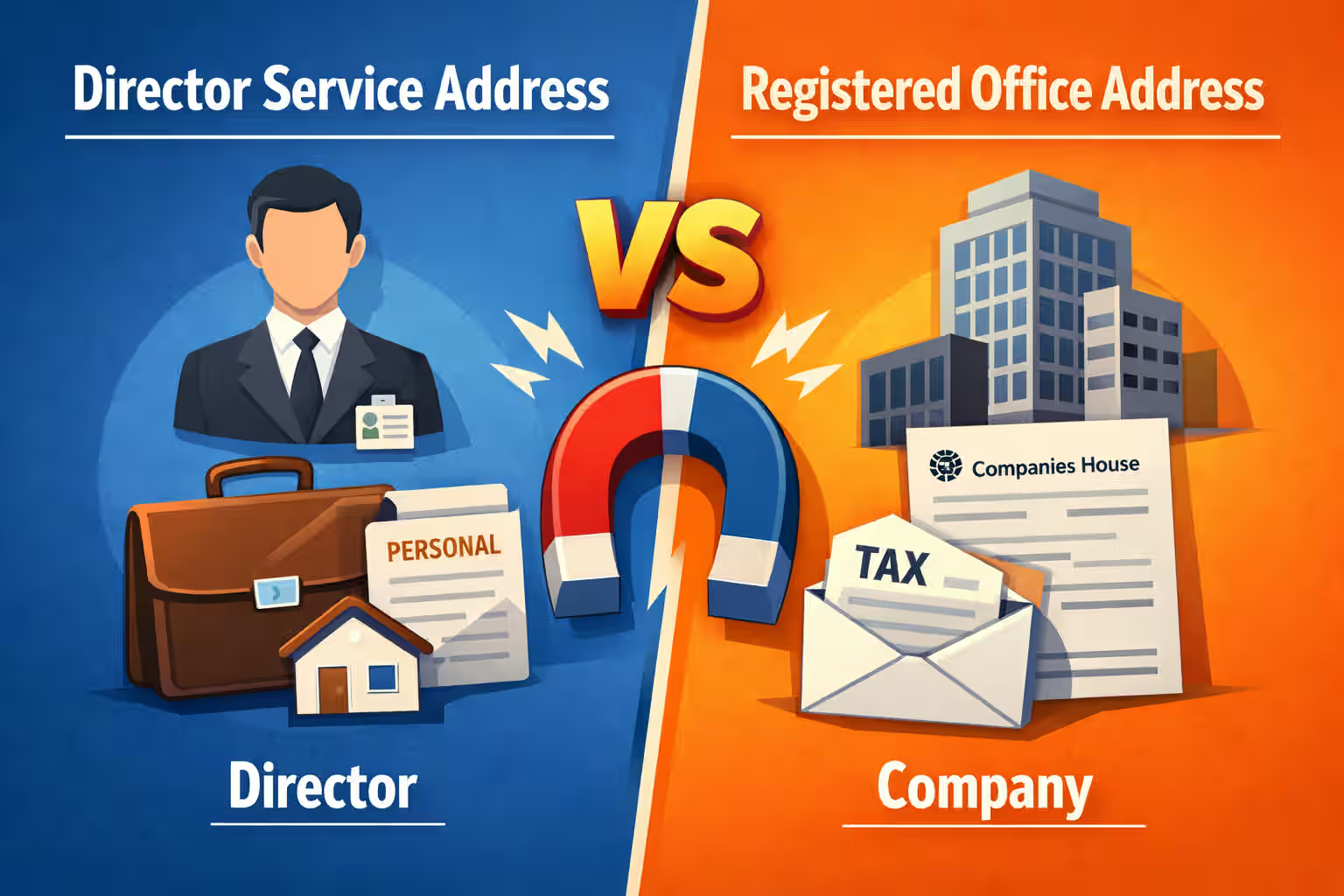
- Registered Office Address
- Director Service Address
- Business Bank Account
- International supplier network
Learn more:
👉 Best Registered Office Address for Non-UK Residents
👉 UK Address for Non Residents
9) How to Find Customers
Many founders spend months finding suppliers.
Customer acquisition is equally important.
Common channels include:
Ecommerce
- Shopify
- Amazon
- Marketplaces
Wholesale
- Retailers
- Distributors
- Independent stores
B2B Sales
- Direct outreach
- Trade shows
- Industry events
Digital Marketing
- SEO
- Google Ads
- Industry directories
10) Insurance and Compliance
Depending on your products, consider:
- Product liability insurance
- Public liability insurance
- Professional indemnity insurance
- Product safety regulations
Different products may require:
- CE marking
- UKCA marking
- Industry certifications
Always verify requirements before importing.
11) Operating Remotely
Many import export companies operate remotely.
Modern businesses often use:
- Freight forwarders
- Third-party logistics providers
- Warehouses
- Digital mail handling
- Virtual offices
You do not necessarily need a physical office.
12) Startup Checklist
- Business structure selected
- Company formed
- Registered office active
- Business bank account opened
- Supplier identified
- Product samples reviewed
- Customs requirements researched
- VAT position assessed
- Website launched
- First customers identified
Mini FAQ
Do I need a warehouse?
Not necessarily.
Many businesses use third-party logistics providers.
Can I start from outside the UK?
Yes.
Many international founders run UK import export companies.
Do I need a business bank account?
If you operate as a limited company, yes.
Is a London address required?
No.
However, many founders use one to improve credibility.
Related Guides
👉 How to Open a UK Company as a Non-Resident
👉 Best Registered Office Address for Non-UK Residents
👉 Do I Need a London Address for a UK Ltd Company?
Final Takeaway
Starting an import export business is easier than many people think.
Building a successful one requires:
- Reliable suppliers
- Strong compliance
- Customer acquisition
- Financial discipline
- Professional credibility
The founders who succeed long term focus on relationships and execution rather than simply finding cheap products.
🚀 Build your international trading business with a professional UK presence
Need a London business address?
✔ Registered Office Address
✔ Director Service Address
✔ Digital Mail Handling
✔ AI Mail Summaries
✔ Built for International Founders
Explore:
👉 Registered Office Address London
👉 UK Address for Non Residents
Disclaimer: This article is for general information only and does not constitute legal, tax, customs, or financial advice.